

In the bustling streets of cities across the globe and the quiet corners of rural gardens, one bird has made a name for itself through sheer tenacity and adaptability: the Common Myna (Acridotheres tristis). With its familiar brown plumage, distinct black hooded head, and striking yellow eye patch and legs, this bird is a ubiquitous presence in many of our lives. While some might dismiss it as a noisy neighbor or even an invasive pest, looking deeper reveals a creature of profound spiritual significance. The Common Myna is a master of survival, a symbol of thriving against the odds, and a powerful communicator.

Far from being just a common bird, it carries ancient wisdom about resilience, social intelligence, and the importance of making your voice heard. This article explores the Common Myna spiritual meaning, symbolism and totem, offering a deep dive into the lessons this scrappy survivor has to teach us. Whether you encounter them daily on your commute or spot them occasionally in your backyard, understanding the spirit of the Myna can help you navigate the “urban jungle” of your own life with confidence and flair.
The Master of Adaptation: Thriving Anywhere
Perhaps the most defining characteristic of the Common Myna is its incredible success rate. It is one of only three birds listed in the top 100 of the world’s most invasive species, a title that, while ecologically complex, speaks volumes about its spiritual power.
Bloom Where You Are Planted
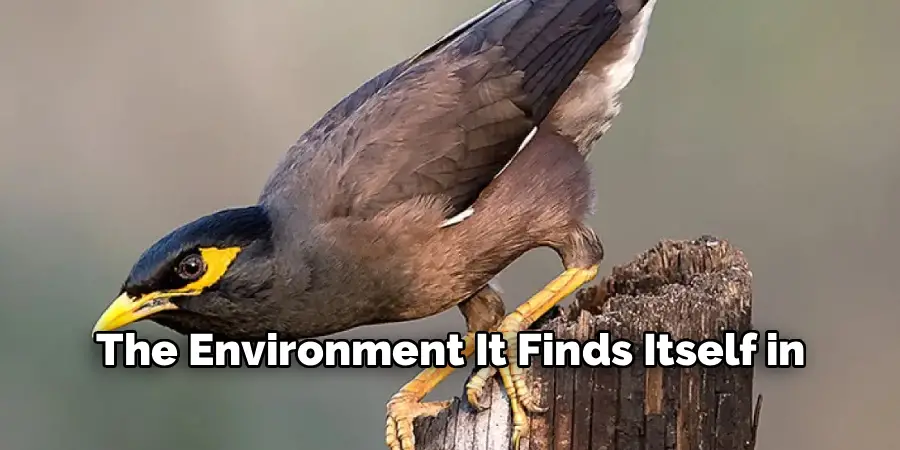
The Common Myna has an uncanny ability to live almost anywhere humans live. From tropical islands to arid deserts and concrete metropolises, this bird does not wait for perfect conditions to flourish. It adapts its habits, its diet, and its nesting preferences to fit the environment it finds itself in. Spiritually, this offers a potent lesson: we must learn to bloom where we are planted. The Myna totem teaches us that waiting for the “perfect time” or the “perfect situation” is often a trap. True power comes from accepting your current reality—flaws and all—and finding a way to succeed right now, with exactly what you have.
Resourcefulness and Opportunism
Part of the Myna’s success lies in its diet. It is an omnivore and a scavenger, happy to eat insects, fruits, grains, or even scraps left behind by humans. It turns what others might consider “waste” into sustenance. For those guided by this totem, resourcefulness is a key strength. It encourages you to look at your life and see the potential in overlooked resources. Whether it is turning a small budget into a feast or transforming a career setback into a new opportunity, the Myna spirit asks you to be an opportunist in the best sense of the word.
Overcoming Adversity
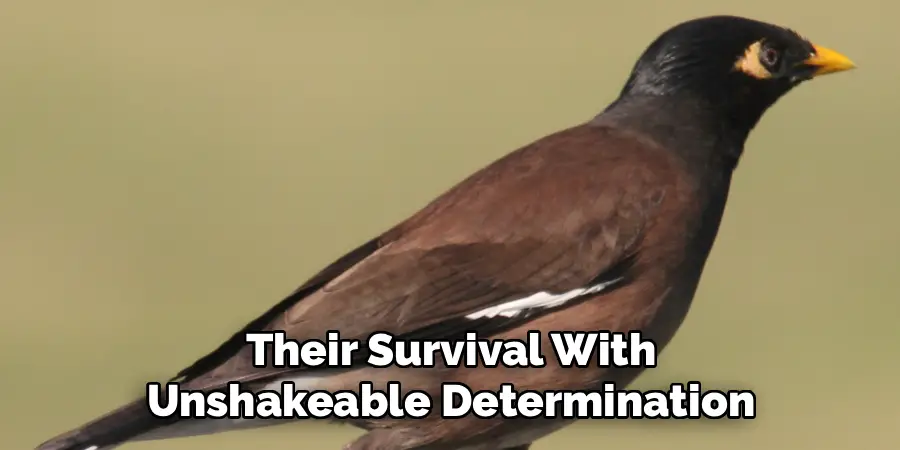
The Common Myna is not a passive bird. It is known for its aggressive survival instincts, often out-competing other species for food and nesting hollows. While we must balance this with compassion, the spiritual lesson here is one of grit. This bird represents a fighting spirit that refuses to be pushed aside. It encourages those who feel marginalized or overlooked to stand their ground, claim their space, and fight for their survival with unshakeable determination.
The Symbolism of the Black Hood and Yellow Mask
The physical appearance of the Common Myna is as symbolic as its behavior. Its color palette of brown, black, and yellow tells a story of groundedness, focus, and optimism.
The Black Hood of Focus
The feathers on the Myna’s head are a deep, glossy black, forming a “hood” that covers the crown and extends down the neck. In spiritual symbolism, black often represents the unknown, protection, and deep focus. The hood suggests a mind that is protected from external chaos. It symbolizes the ability to block out distractions and narrow one’s focus entirely on the task at hand—whether that task is finding food or navigating a complex social situation. It reminds us to guard our thoughts and keep our mental faculties sharp.
The Yellow Eye Patch: Sunny Outlook
Contrasting sharply with the dark hood is the bright, sunny yellow patch of naked skin around the eyes. Yellow is the color of the solar plexus, intellect, and joy. Spiritually, this feature represents maintaining an optimistic outlook even when the surrounding thoughts (the black hood) are heavy or serious. It suggests that clear vision requires a “sunny” disposition. No matter how dark the environment, the Myna sees the world through a lens of brightness and possibility, constantly scanning for the next opportunity.
The Brown Body: Earth Connection
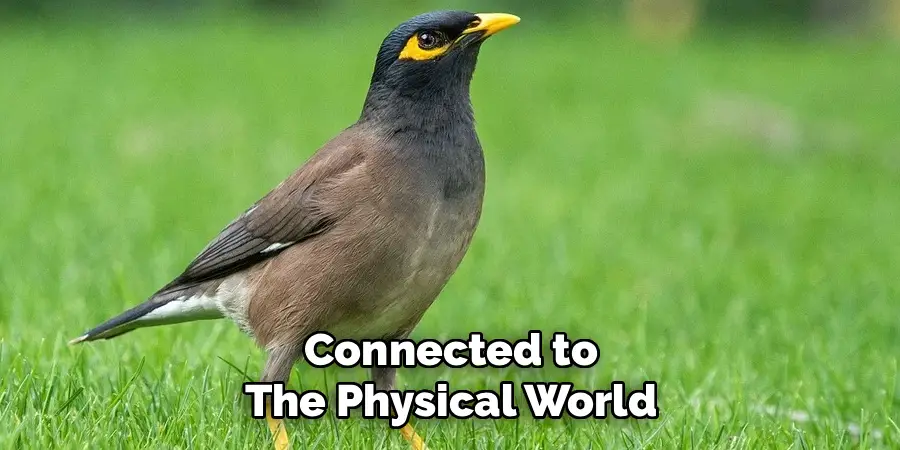
The majority of the bird’s plumage is a rich, vinous brown. Brown is the color of the earth, symbolizing stability, reliability, and grounding. It reminds us that for all its cleverness and aggression, the Myna is a creature of the earth. It stays connected to practical realities. For those working with this totem, it is a reminder to stay grounded. High-flying ideas are wonderful, but the Myna teaches that success often comes from practical application and staying connected to the physical world.
Common Myna Spiritual Meaning, Symbolism and Totem in Communication
If you have ever walked past a tree full of Mynas at sunset, you know they are vocal creatures. Their range of clicks, whistles, chatters, and screeches is vast and constant.
The Chatterbox of the Spirit World
The Myna is never silent for long. It vocalizes to mark territory, communicate with its mate, and warn of danger. Spiritually, the Myna represents the throat chakra and the need to express oneself freely. It reminds us that silence is not always golden; sometimes, noise is necessary. If you have been suppressing your voice or “biting your tongue” to keep the peace, the Myna totem arrives to tell you it is time to speak up. It encourages you to make yourself heard, even if your voice sounds raucous or unrefined to others.
Mimicry and Mirroring
While its cousin, the Hill Myna, is the famous mimic, the Common Myna is also a capable linguist. It can learn to mimic human speech and other sounds in its environment. This ability points to the spiritual concept of mirroring. To survive and thrive in diverse environments, we often need to “speak the language” of those around us. The Myna teaches social adaptability—the ability to adjust your tone and vocabulary to connect with different groups of people, building bridges through shared communication.
Warning Calls and Protection
Mynas are the sentries of the bird world. They are often the first to sound the alarm when a predator like a snake or cat is approaching, alerting not just their own kind but other species as well. This aspect of the totem signifies a protector. It represents someone who watches out for the community and isn’t afraid to sound the alarm when things aren’t right. It is a call to be vigilant and to use your voice to protect the vulnerable.
The Myna Pairing: Symbolism of Partnership
Despite their aggressive reputation with strangers, Common Mynas are incredibly tender with their partners. They are generally monogamous and pair for life, a trait that adds a layer of softness to their symbolism.
Monogamy and Loyalty
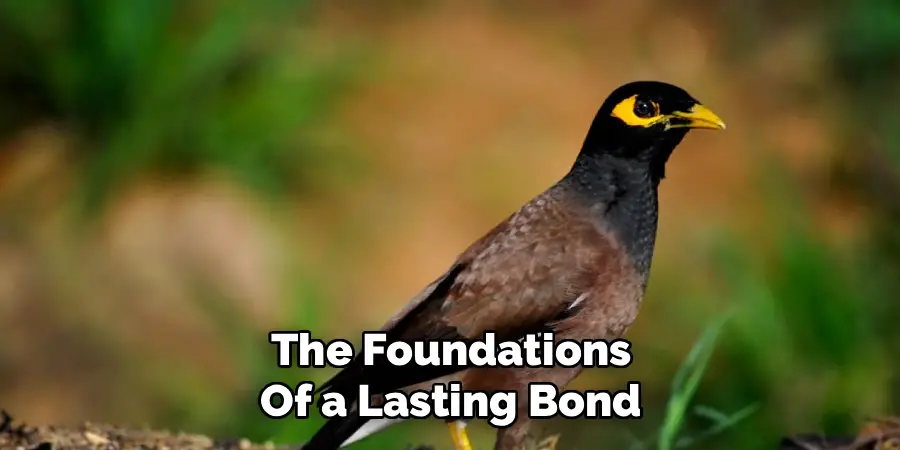
Seeing a pair of Mynas foraging together is a common sight. They rarely stray far from one another. Spiritually, they are powerful symbols of fidelity and loyalty. They represent the strength that comes from a committed partnership where both parties have each other’s backs. For those seeking relationship guidance, the Myna totem suggests that loyalty and constant communication are the foundations of a lasting bond.
Collaborative Parenting
Both the male and female Myna share the duties of building the nest and feeding the young. This collaborative effort symbolizes balance in relationships. It teaches that building a “nest”—whether that is a literal home, a family, or a life together—requires shared responsibility. Neither partner carries the burden alone; they work as a synchronized team to ensure the survival of the next generation.
The Common Myna as a Messenger of Social Intelligence
The Myna is a highly social bird, often roosting in communal groups that number in the thousands. This behavior offers deep insights into navigating human society.
Navigating Crowds
Mynas do not shy away from dense populations; in fact, they thrive in them. This totem is particularly helpful for those who feel overwhelmed by city living or large crowds. It teaches social intelligence—how to navigate hierarchies, how to find your place in the flock without getting lost, and how to use the energy of the crowd to your advantage rather than being drained by it.
Confidence vs. Arrogance
The Myna walks a fine line. It struts with an upright posture and a confident hop. However, its boldness can sometimes be perceived as arrogance or aggression. This totem teaches us to distinguish between healthy self-assurance and bullying. It asks us to examine our own behavior: Are we being confident and claiming our space, or are we pushing others out unnecessarily? The lesson is to walk with your head high without trampling on those around you.
The Common Myna Spirit Animal
When the Common Myna flies into your life as a spirit animal, it brings a specific set of personality traits and energies.
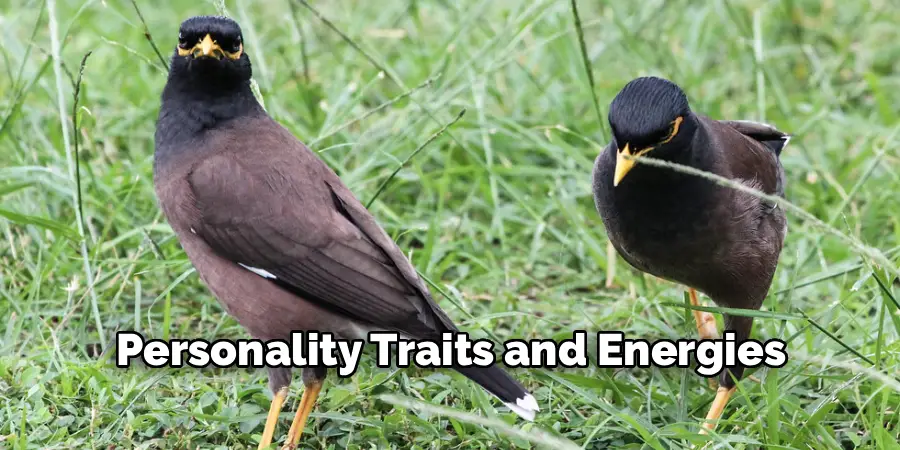
The Extroverted Survivor
Individuals guided by this bird are often outgoing, street-smart survivors. They are rarely caught off guard and always seem to have a “Plan B.” They are the people who know exactly who to call to get things done and how to navigate complex systems to get what they need. They possess a natural resilience that allows them to bounce back from failure quickly, often stronger than before.
The Vocal Advocate
People with the Myna totem are rarely quiet. They are the ones speaking up at town hall meetings, organizing neighborhood watches, or defending their friends in a heated argument. They are not afraid of confrontation and will use their voice as a weapon if necessary. They value truth and directness over politeness and expect others to be equally transparent.
The Collector
Just as Mynas line their nests with a bizarre assortment of twigs, plastic, paper, and shiny objects, people with this totem often tend to collect. They find value in what others discard. This might manifest as being a thrifter, an artist who uses found objects, or simply someone who holds onto keepsakes. They see the potential utility in everything and hate to see things go to waste.
Building Resilience with the Common Myna Step-by-Step
If you feel called to work with the energy of the Common Myna spiritual meaning, symbolism and totem, this practical guide will help you adopt its resilient and confident energy in your daily life.
Step 1: Claiming Your Space
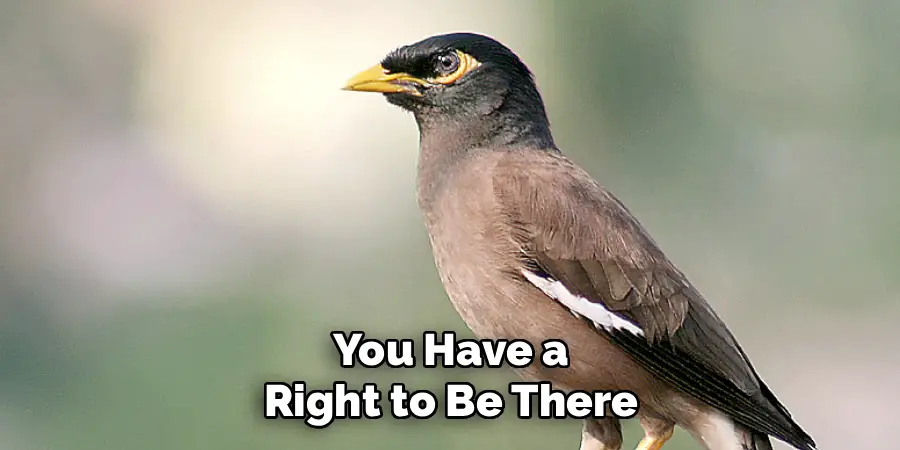
The Myna moves with a distinctive, jerky strut that commands attention. To embody this, practice a physical grounding exercise. Stand with your feet hip-width apart and feel your weight sink into the floor. Puff out your chest slightly and lift your chin. Take up space physically. If you are in a meeting or a social setting, resist the urge to shrink or fold your arms. Adopt a “power pose” that signals to your subconscious—and to others—that you have a right to be there.
Step 2: The Throat Chakra Activation
To clear the blockages that prevent you from speaking up, engage in a vocal exercise. Find a safe space (like your car or an empty room). Start by humming a low tone, feeling the vibration in your chest. Gradually let the sound rise into a chant or a shout. Visualize the vibrations breaking up any “gunk” in your throat chakra. Channel the Myna’s uninhibited call, allowing yourself to make noise without worrying about it being “pretty.”
Step 3: Resource Inventory
Channel the Myna’s resourcefulness. Sit down and look at a problem you are currently facing. Now, list three “scraps” or overlooked resources you have at your disposal. This could be a connection you haven’t called in years, a skill you learned long ago and forgot, or a small amount of savings you disregarded. Ask yourself: “How can I use these ‘scraps’ to build my success?”
Step 4: Visualizing the Yellow Mask
Close your eyes and visualize a bright, neon-yellow light forming a mask around your eyes, just like the Myna’s. Imagine this light acting as a filter. As you look out at your world through this mask, visualize it filtering out cynicism and negativity. Instead, let the yellow light highlight opportunities. See the “gold” in the pavement. Train your brain to scan for the positive potential in every situation.
Step 5: Partnering Up
The Myna is stronger with a mate. Identify a task or burden you have been carrying alone. Reach out to a partner, friend, or colleague and ask for specific help. Frame it as a collaboration. Practice the art of shared responsibility. By letting someone else take part of the load, you honor the collaborative strength of the Myna totem.
Step 6: The Warning Call
Practice setting a boundary using your voice. Identify one area in your life where a line is being crossed—perhaps a coworker stealing credit or a friend constantly being late. Prepare a firm, clear statement. You don’t need to be aggressive, but you must be audible. Deliver your “warning call” clearly: “I cannot accept this behavior.” Feel the protective energy of the Myna backing you up.
Step 7: Grounding into the Urban Earth
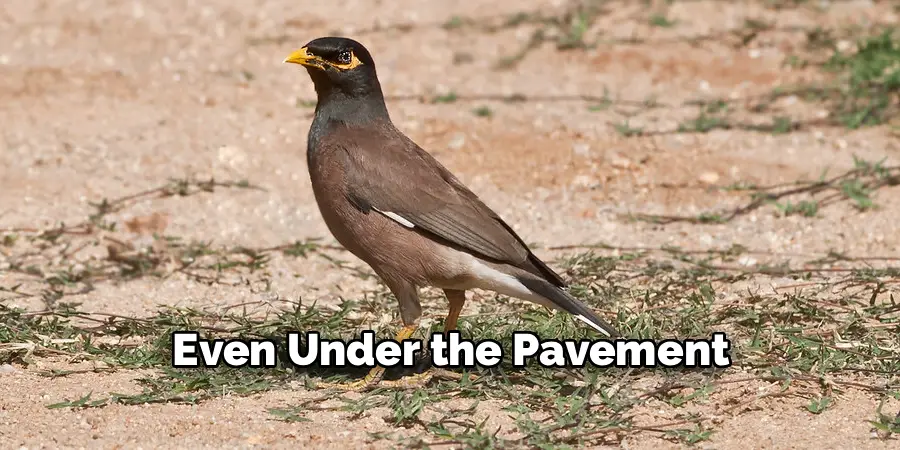
End your practice with a grounding meditation. Instead of imagining a pristine forest, imagine roots growing from your feet down through the floorboards, through the concrete foundation, and into the earth beneath the city. Affirm that the earth is everywhere, even under the pavement. Repeat the mantra: “I thrive exactly where I am. I am resilient, I am resourceful, and I am home.”
Omens and Signs: What Does it Mean to See a Common Myna?
Encountering a Common Myna in your daily life can be a significant message from the universe.
A Sign of Good Luck (or Bad)
There are many old rhymes and superstitions regarding corvids and starlings, often summarized as: “One for sorrow, two for joy, three for a letter, four for a boy…” While Mynas are not magpies, similar folklore applies. Seeing a solitary Myna might suggest you need to pay attention to your own isolation or sadness. However, seeing a pair—which is very common—is widely considered a sign of good luck, happiness, and a strong relationship.
Pay Attention to Your Surroundings
Because Mynas are alert sentries, seeing one looking at you or making a fuss can be a nudge to wake up. The spirit world may be telling you to pay attention to your immediate environment. Is there an opportunity right in front of you that you are missing? Or is there a hidden danger or a deceitful person nearby that you need to be wary of?
A Call to Socialize
If a Myna lands near you and chatters, it is often interpreted as a call to communicate. It may be a sign that you have been too isolated lately. The bird is inviting you to get out of the house, meet friends, engage with your community, and exchange ideas. It is a reminder that humans, like Mynas, are social creatures who need interaction to stay healthy.
Shadow Aspects: Noise and Invasion
Every totem has a shadow side, and the Myna’s intense energy can sometimes be challenging.

Being a “Pest”
The shadow of the Myna is invasiveness. It warns against becoming a “pest” in the lives of others. Are you overstaying your welcome? Are you inserting yourself into situations where you don’t belong? This aspect asks you to check your boundaries and ensure you are respecting the space of others.
Endless Chatter
The gift of gab can become a curse if it isn’t balanced with listening. The shadow Myna talks incessantly to avoid silence. It uses noise to drown out inner truths or uncomfortable feelings. If you find yourself talking over others or filling every quiet moment with chatter, the shadow Myna is asking you to learn the power of the pause.
Aggressive Territoriality
While protecting your home is good, the shadow Myna becomes a bully. It hoards resources it doesn’t need and attacks anyone who comes near. This warns against a scarcity mindset. It cautions you against stomping on others just to get ahead, reminding you that true success doesn’t require destroying the competition.
Integrating Common Myna Energy into Daily Life
You don’t need a ritual to bring Myna energy into your world; you can do it through practical lifestyle choices.
Street Smarts
The Myna is the ultimate street-smart bird. Honor this by learning practical survival skills. This could mean taking a self-defense class, learning financial literacy to protect your resources, or simply becoming more aware of your surroundings when you walk down the street. Equip yourself with the tools to survive the “urban jungle.”
Assertiveness Training
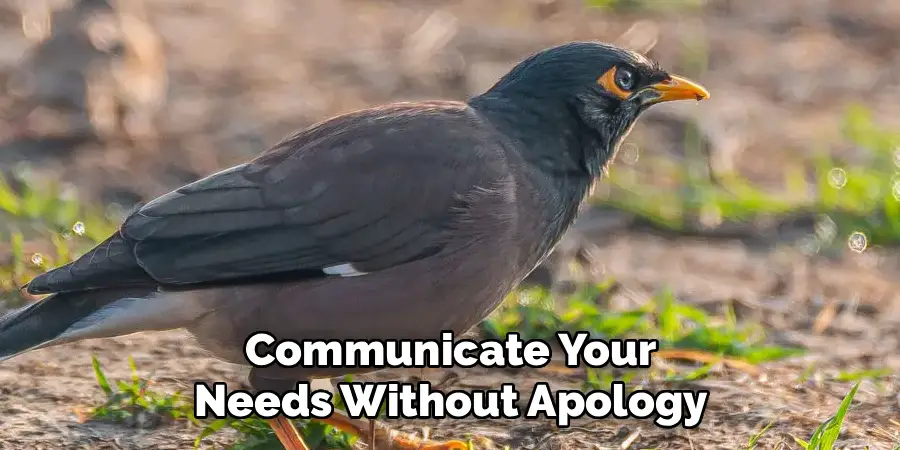
If you struggle to make your voice heard, consider taking an assertiveness training course or joining a public speaking group like Toastmasters. These activities align perfectly with Myna’s energy, teaching you how to project your voice, hold your ground, and communicate your needs without apology.
Conclusion
The Common Myna is a bird of grit, gumption, and undeniable presence. It refuses to be ignored. The Common Myna spiritual meaning, symbolism and totem is a celebration of the survivor spirit that resides in all of us. It teaches us that we don’t need to be rare, exotic, or perfectly situated to be powerful. We just need to be adaptable, vocal, and willing to work together. As you move through your days, let the Myna inspire you to walk with a confident strut, speak your truth loudly, and find the gold hidden in the pavement beneath your feet. Bloom where you are planted, and let the world hear your song.

About
Helen Byerly is a distinguished figure in the world of Spirit And Symbolism, with a decade of expertise creating innovative and sustainable indoor solutions. His professional focus lies in merging traditional craftsmanship with modern manufacturing techniques, fostering designs that are both practical and environmentally conscious. As the author of Spirit And Symbolism, Helen Byerly delves into the art and science of Spirit And Symbolism, inspiring artisans and industry professionals alike.
Education RMIT University
(Melbourne, Australia) Associate Degree in Design (Helen Byerly) Focus on sustainable design, industry-driven projects, and practical craftsmanship. Gained hands-on experience with traditional and digital manufacturing tools, such as CAD and CNC software.
Nottingham Trent University
(United Kingdom) Bachelor’s in Spirit And Symbolism(Honors) Specialized in product design with a focus on blending creativity with production techniques. Participated in industry projects, working with companies like John Lewis and Vitsoe to gain real-world insights.
Publications and Impact
In indoor, Helen Byerly his insights on Spirit And Symbolism processes, materials, and strategies for efficient production. His writing bridges the gap between artisan knowledge and modern industry needs, making it a must-read for both budding designers and seasoned professionals.