

The Eurasian Wolf (Canis lupus lupus) is the quintessential wolf of legend and lore, a powerful creature that has roamed the vast landscapes of Europe and Asia for millennia. It is the wolf that haunts our fairy tales, inspires our myths, and embodies the perfect balance between raw, primal instinct and sophisticated social intelligence. Its historical range, stretching across two continents, makes it a natural symbol of bridging worlds—a connector between Eastern and Western spiritual traditions. To explore the Eurasian Wolf spiritual meaning, symbolism and totem is to uncover profound lessons about authentic leadership, ancestral wisdom, and the courage required to explore the dark forests of our own psyche.

This is the wolf of Romulus and Remus, the wolf of Grimms’ Fairy Tales, and the wolf that runs through the heart of Norse mythology. Its spirit is complex, representing both the fearsome predator and the nurturing guardian. When this spirit animal appears in your life, it is a significant call to examine your own power, your role within your community, and your relationship with the wild, untamed aspects of your nature. This article will guide you through the dense forests of this wolf’s symbolism, exploring its mythological roots, its sophisticated pack dynamics, and the deep wisdom it offers as a spiritual guide.
The Symbolism of the Great Traveler
The Eurasian Wolf historically possessed the largest range of any wolf subspecies, a testament to its incredible adaptability and spirit of exploration. This physical reality translates into powerful spiritual symbolism about expansion, connection, and the journey of the soul.
The Spirit of Exploration
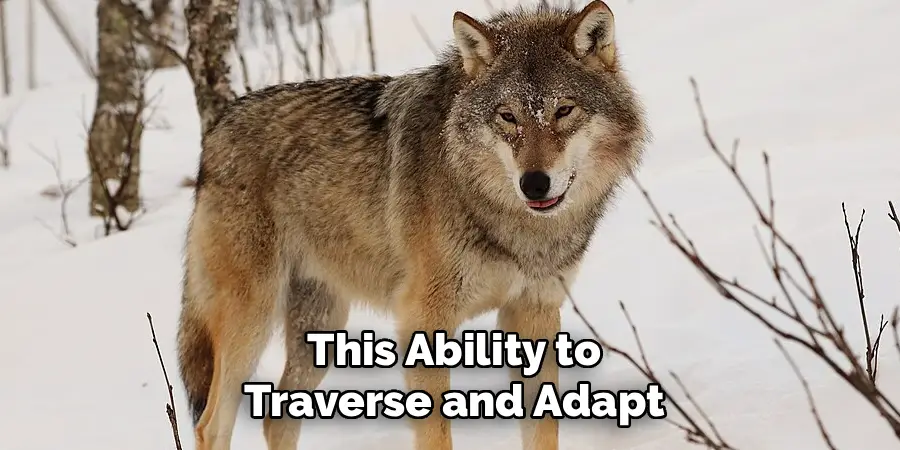
The Eurasian Wolf is a master of diverse landscapes, thriving in everything from the dense taiga forests of Russia to the open steppes of Central Asia. This ability to traverse and adapt to different environments symbolizes the spiritual urge to explore new horizons. The wolf encourages us to break free from our comfort zones and to venture into unknown territories—whether through physical travel, intellectual study, or spiritual inquiry. It is the patron spirit of the adventurer, the scholar, and the seeker, reminding us that growth only happens when we are willing to wander off the beaten path.
Bridging Cultures and Worlds
As a creature that spans two continents, the Eurasian Wolf acts as a natural bridge between different cultures and realms. Spiritually, this represents the ability to hold multiple perspectives, to understand different viewpoints, and to act as a mediator or diplomat. If the Eurasian Wolf is your totem, you may find yourself in roles that require you to unite disparate groups or translate ideas between people who think differently. The wolf teaches the art of finding common ground, reminding us that despite our surface differences, we are all connected by the same primal instincts and desires.
Eurasian Wolf Spiritual Meaning, Symbolism and Totem in Folklore
No wolf has captured the human imagination quite like the Eurasian Wolf. It is the central character in countless stories, serving as both villain and hero. This dualistic portrayal is the key to understanding its deep spiritual medicine. The Eurasian Wolf spiritual meaning, symbolism and totem are deeply enriched by its folkloric past.
The Shadow and the Teacher
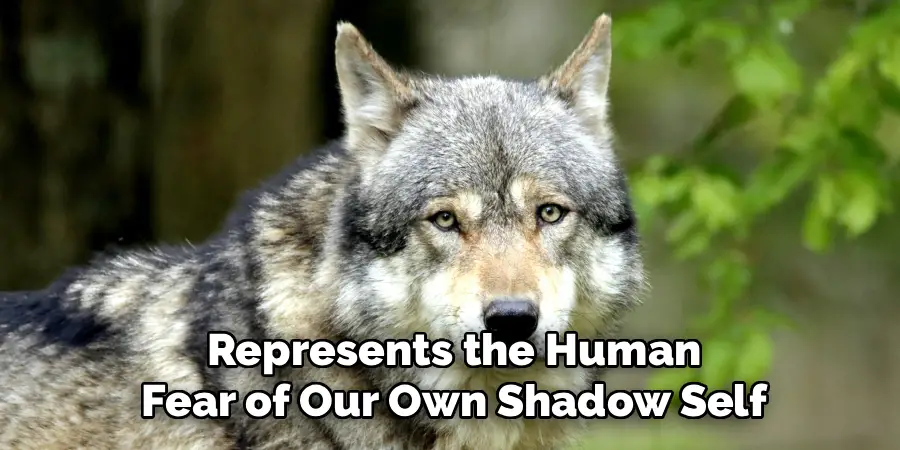
In many European traditions, particularly in stories collected by the Brothers Grimm, the wolf is cast as the “Big Bad Wolf”—a symbol of greed, deception, and untamed danger. This represents the human fear of our own shadow self, those primal instincts that society teaches us to repress. However, other traditions see the wolf as a noble protector and nurturer. The most famous example is the Roman myth of Romulus and Remus, the founders of Rome, who were suckled and saved by a she-wolf. The spiritual lesson here is about integration. The wolf teaches that we cannot become whole by denying our shadow. We must acknowledge our “darker” instincts—our anger, our ambition, our primal desires—and healthily integrate them to access our full power.
Fenrir and the Unbound Force
In Norse mythology, the wolf Fenrir is a figure of immense power, a force of nature so great that the gods themselves fear him. They attempt to bind him, and this act of suppression ultimately leads to Ragnarök, the end of the world. A modern spiritual interpretation of this myth sees Fenrir not as purely evil, but as a symbol of raw, untamed potential. The story serves as a cautionary tale about the consequences of trying to chain or suppress powerful natural forces, whether in the world or within ourselves. The Eurasian Wolf spirit teaches that such power should not be feared and bound, but respected, understood, and channeled wisely.
The Eurasian Wolf as a Totem Animal
When the Eurasian Wolf steps forward as your spirit guide, it brings with it the energy of leadership, protection, and profound instinct. This totem is an ally for those ready to step into their power and live a life of authenticity and purpose.
Characteristics of the Eurasian Wolf Totem
Individuals who resonate with the Eurasian Wolf totem are often charismatic and natural-born leaders. They possess a magnetic presence that draws others to them. While they value tradition and history, they are not afraid to carve new paths and challenge the status quo. These individuals are fiercely protective, especially of their family and inner circle, whom they consider their “pack.” They are often gifted teachers, sharing wisdom gleaned from their own explorations of life’s wild places. They feel things deeply and are driven by a powerful internal compass that guides their every move.
When the Totem Appears
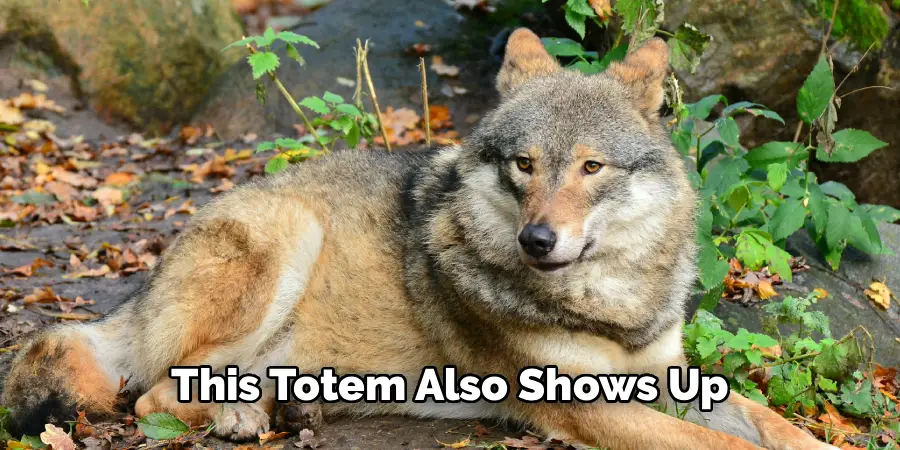
The Eurasian Wolf spirit often makes its presence known when you are being called to take on a leadership role, whether in your family, your community, or your career. It appears to lend you the wisdom and courage to guide your “pack” effectively. This totem also shows up when you need to establish and defend your personal boundaries. If you have been letting others take advantage of your kindness, the wolf arrives to teach you how to say “no” with a quiet authority that commands respect. Most importantly, it appears when you are being asked to trust your instincts over social conditioning, to listen to that wild voice within you that knows the true path forward.
Pack Dynamics and Social Hierarchy
The Eurasian Wolf pack is a sophisticated social unit, typically a family led by the breeding pair. The intricate interactions within the pack offer powerful lessons on responsible leadership and the value of community.
Responsible Leadership
The leaders of a wolf pack are not tyrants; they are the parents. Their role is to guide, protect, and provide for their family. They lead not through fear and aggression, but through wisdom, experience, and a deep sense of care for the collective. This is a profound spiritual model for leadership. The wolf teaches that true authority is earned through service and responsibility. It is about making decisions that benefit the whole group, nurturing the young and vulnerable, and leading by example. It challenges us to redefine power not as dominance over others, but as the power to uplift and empower them.
The Role of the Beta and Omega
In any pack, every member has a vital role. The “Beta” wolves often serve as seconds-in-command, helping to raise pups and enforce pack harmony. Even the low-ranking “Omega” wolf plays a crucial part, often acting as a social buffer and instigator of play, diffusing tension within the group. The spiritual lesson here is that one does not need to be the leader to be essential. The wolf totem teaches us to find and honor our unique role within our community, understanding that every contribution, no matter how small it may seem, is vital to the health and survival of the pack.
The Hunter and the Provider
Eurasian Wolves are formidable hunters, capable of working together to take down large prey like moose, red deer, and wild boar. Their hunting strategies are a masterclass in cooperation and provision.
Coordinated Effort
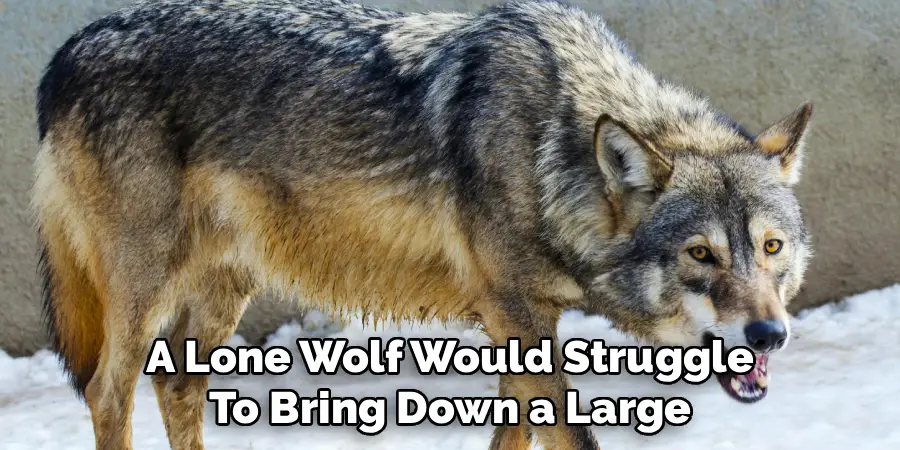
A lone wolf would struggle to bring down a large, healthy moose. The pack succeeds through coordinated effort, strategic planning, and flawless communication. They use the terrain, their individual strengths, and their collective intelligence to achieve what would be impossible alone. This serves as a powerful metaphor for tackling the “big game” in our own lives—the seemingly insurmountable challenges or ambitious goals. The wolf spirit teaches us that we do not have to face these obstacles alone. It encourages us to build a team, ask for help, and believe in the power of collective action.
Providing for the Vulnerable
A successful hunt benefits the entire pack. The wolves will gorge themselves, but they will also carry food back for the pups, the nursing mother, or any injured members who could not participate. This act of provision is a beautiful symbol of spiritual reciprocity and community care. It reminds us that our successes and our abundance are not just for us. The wolf totem teaches the duty of sharing our resources—be it our time, our knowledge, or our wealth—with those in our pack who are in need.
Connection to Forest Magic and the Wild
The Eurasian Wolf is deeply connected to the old-growth forests of Europe and Russia. It is a creature of the deep woods, a keeper of ancient secrets, and a symbol of the untamed wilderness that still exists within the modern world.
Guardian of the Ancient Woods
In many traditions, the wolf is seen as the guardian of the forest. It moves through the trees like a silent shadow, knowing every path and every secret. Spiritually, the wolf invites us to connect with this ancient, sylvan magic. It encourages us to spend time in the woods, to listen to the rustle of leaves, and to reconnect with the deep, grounding rhythms of nature. The forest is a place of introspection and renewal, and the wolf is our guide through its depths.
Awakening the Wild Within
Modern life often domesticates us, forcing us to suppress our primal instincts and emotions. We are taught to be polite, quiet, and controlled. The Eurasian Wolf spirit arrives as an antidote to this over-civilization. It invites us to reconnect with our wild nature—to howl our truths, to run with abandon, and to break free from the suffocating constraints of social etiquette when necessary. It is not a call to be reckless, but a call to be fully, authentically alive.
Interpreting Eurasian Wolf Dreams
When this powerful archetypal wolf enters your dreams, it is carrying a message from the deepest parts of your psyche. The context of the dream is crucial for a correct interpretation.
A Wolf Blocking Your Path
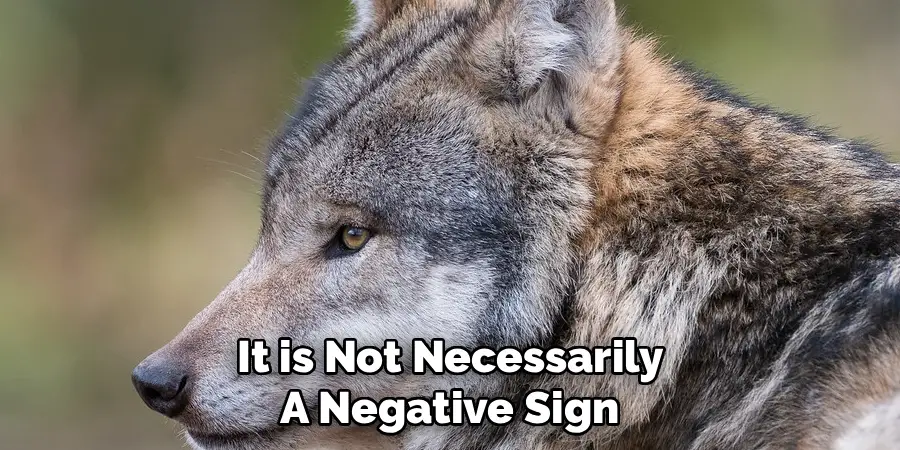
If you dream of a wolf standing in your path and blocking your way, it is not necessarily a negative sign. This dream is often a “check yourself” moment from your subconscious. It can signify that you are heading down the wrong path in life, one that is not aligned with your true purpose. The wolf is there to stop you before you go too far. Alternatively, it can be a message that you need to establish stronger boundaries. The wolf may be telling you to pause and secure your emotional or physical territory before you continue moving forward.
Running with the Pack
To dream that you are running with a wolf pack is an incredibly powerful and positive omen. It signifies a profound sense of belonging, purpose, and alignment. It suggests that you have found your tribe and are moving in perfect synchronization with your environment and your goals. This is a dream of “flow,” where your actions and instincts are perfectly aligned. It is a confirmation that you are on the right track, supported by your spiritual allies, and moving with strength and confidence toward your destiny.
The Shadow Side: Ferocity and Greed
The immense power of the Eurasian Wolf spirit has a dark side. When its energy is unbalanced, its greatest strengths can become its most destructive weaknesses.
Unchecked Aggression
The wolf’s protective and assertive nature, when twisted by the shadow, can manifest as bullying, intimidation, and unchecked aggression. This is the energy of the leader who rules through fear, or the individual who uses their strength to dominate and harm others rather than to protect them. The wolf spirit warns against this misuse of power, reminding us that true strength is tempered with wisdom and compassion.
The “Big Bad Wolf” Complex
This shadow aspect arises from the wolf’s association with greed and villainy in folklore. It can manifest as a deep-seated selfishness, a “what’s in it for me?” attitude that disregards the needs of the pack. A person operating in this shadow might project their own negative traits onto others, always seeing themselves as the victim while acting as the villain in someone else’s story. It is a warning against allowing ambition to curdle into ruthless greed.
Rituals to Connect with the Eurasian Wolf Spirit
To invite the powerful and protective energy of the Eurasian Wolf into your life, you can perform simple rituals that honor its ancestral and wild nature.
Ancestral Altar Work
Given the wolf’s deep roots in the ancient lands of Europe and Asia, it is a powerful guardian of lineage.
- Create a Space: Set up a small altar or sacred space with photos or heirlooms from your ancestors.
- Light a Candle: Light a white or gray candle to represent the wolf’s spirit.
- Invoke the Spirit: Ask the spirit of the Eurasian Wolf to stand as a guardian for your ancestral line. You might say, “Spirit of the ancient wolf, protector of the tribe, stand guard over my lineage. Grant us the strength, wisdom, and loyalty of your pack.”
- Sit in Gratitude: Spend a few moments in quiet meditation, feeling gratitude for your roots and the protective energy of the wolf.
The “Howl” Release
This is a powerful ritual for releasing pent-up emotions and connecting with your primal voice.
- Find a Private Place: Go somewhere you will not be disturbed, such as a secluded spot in nature, your car, or even your bedroom with a pillow.
- Center Yourself: Take a few deep breaths and think about an emotion you have been suppressing—be it joy, grief, or anger.
- Release the Sound: Let out a vocal release. It doesn’t have to be a perfect howl. It can be a shout, a scream, a song, or a deep guttural sound. The point is to use your voice to move the energy out of your body.
- Feel the Freedom: Notice the feeling of release and freedom that comes after. This practice helps you connect with the wolf’s expressive nature and asserts your right to take up space in the world.
Conclusion
The Eurasian Wolf spiritual meaning, symbolism and totem is a rich and ancient tapestry woven from threads of myth, biology, and primal wisdom. This powerful spirit animal is a guide through the deep forests of the soul, teaching us how to balance our wild, instinctual nature with our responsibilities to our community. It is a symbol of intelligent leadership, fierce loyalty, and the courage to face our own shadows.
As you walk your path, carry the medicine of the Eurasian Wolf with you. Lead with a wise and compassionate heart, protect your pack with unwavering devotion, and never fear the journey into the unknown. Trust your instincts, honor your lineage, and remember that within you beats the heart of the wild.

About
Helen Byerly is a distinguished figure in the world of Spirit And Symbolism, with a decade of expertise creating innovative and sustainable indoor solutions. His professional focus lies in merging traditional craftsmanship with modern manufacturing techniques, fostering designs that are both practical and environmentally conscious. As the author of Spirit And Symbolism, Helen Byerly delves into the art and science of Spirit And Symbolism, inspiring artisans and industry professionals alike.
Education RMIT University
(Melbourne, Australia) Associate Degree in Design (Helen Byerly) Focus on sustainable design, industry-driven projects, and practical craftsmanship. Gained hands-on experience with traditional and digital manufacturing tools, such as CAD and CNC software.
Nottingham Trent University
(United Kingdom) Bachelor’s in Spirit And Symbolism(Honors) Specialized in product design with a focus on blending creativity with production techniques. Participated in industry projects, working with companies like John Lewis and Vitsoe to gain real-world insights.
Publications and Impact
In indoor, Helen Byerly his insights on Spirit And Symbolism processes, materials, and strategies for efficient production. His writing bridges the gap between artisan knowledge and modern industry needs, making it a must-read for both budding designers and seasoned professionals.