

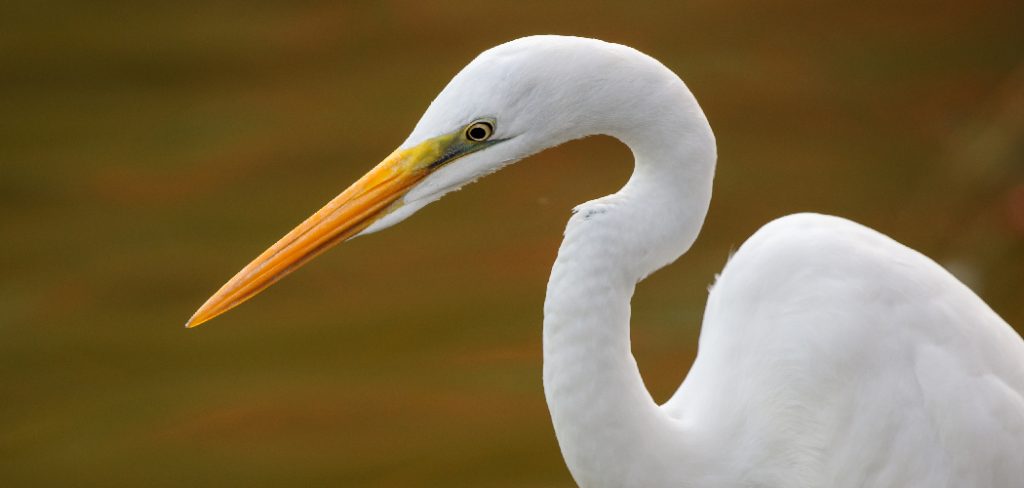
Standing tall amidst the reeds of marshes and wetlands across the globe, the Great Egret (Ardea alba) is a figure of undeniable elegance. With its brilliant white plumage, long S-shaped neck, and slow, deliberate movements, this large heron commands attention without ever making a sound. It is a creature of grace, a living statue that embodies the stillness of the water it hunts in. But beneath this serene exterior lies a predator of exceptional skill and precision. The Great Egret does not rush; it waits, it observes, and when the moment is perfect, it strikes.
To the spiritual seeker, this bird is a profound teacher of patience, purity, and the art of “active waiting.” It bridges the gap between the fluid emotional world of water and the intellectual clarity of air. When the Great Egret enters your awareness, it is often a sign to slow down, to clear your mind, and to trust in divine timing. It brings a message of clarity, asking us to wipe the slate clean and approach our lives with a renewed sense of dignity and focus.
In this comprehensive guide, we will explore the Great Egret spiritual meaning, symbolism and totem wisdom. We will delve into the lessons this majestic bird offers about maintaining inner stillness in a chaotic world, the power of observation, and the strength found in solitude. Whether you have admired one standing motionless in a lake or encountered one in your dreams, the Great Egret invites you to step into a state of graceful awareness.
The Symbolism of Pure White: Divinity and Clarity
The most striking feature of the Great Egret is undoubtedly its plumage. Unlike other herons that may be grey, blue, or mottled for camouflage, the Great Egret is entirely, brilliantly white. In almost every spiritual tradition, white is the color of purity, divinity, and higher consciousness. It represents the presence of the Holy Spirit, the cleansing light of the divine, and the concept of a blank slate—a new beginning free from the stains of the past.
The Great Egret embodies this energy of pristine clarity. It symbolizes a state of being that is untainted by negativity or confusion. When we connect with this bird, we are reminded of our own inner light. It encourages us to cleanse our thoughts and intentions, clearing away the mental clutter that clouds our judgment. The Egret teaches that true power comes from a place of purity and integrity, where our actions are transparent, and our motives are clear.
The Light in the Shadows
Great Egrets are often found in swamps, marshes, and muddy wetlands—places that can be dark, murky, and chaotic. Yet, the bird remains impeccably clean. This visual contrast is powerful. The bright white bird standing against the dark water symbolizes hope and illumination in difficult times. It teaches us that we can exist in challenging environments without being consumed by them. We can bring light into the shadows. The Egret reminds us that our environment does not define us; we have the power to remain pure of heart even when surrounded by darkness.
Spiritual Cleanliness
Despite living in the mud, the Egret spends a significant amount of time preening, ensuring its feathers remain pristine. This behavior points to the spiritual discipline of “cleanliness.” This isn’t just about physical hygiene, but energetic hygiene. The Great Egret totem encourages us to regularly cleanse our energy field, release negative emotions, and protect our spiritual well-being. It is a reminder to keep our “plumage” bright so that we can fly freely without being weighed down by the debris of life.
The Master of Patience: Stillness in Motion
If you have ever watched a Great Egret hunt, you have witnessed a masterclass in patience. It can stand absolutely motionless on one leg for what seems like hours, eyes fixed on the water. It does not pace; it does not chase. It waits. This behavior is the essence of the Great Egret’s spiritual wisdom. It teaches the power of stillness—not as a passive state of doing nothing, but as an active state of heightened alertness.
In a modern world that glorifies busyness and constant movement, the Egret offers a radical alternative. It shows us that rushing often leads to mistakes and wasted energy. By becoming still, the Egret becomes one with its environment, allowing the prey to come to it. This teaches us the value of conserving our energy and avoiding erratic, reactive movements in our own lives. It suggests that sometimes, the most effective action is to stop moving and simply pay attention.

The Art of Observation
The Egret’s stillness is driven by observation. It is gathering data, watching for the subtle ripple that indicates a fish. As a spirit guide, the Egret teaches us to be keen observers of our own lives. Before we react to a situation, we are asked to stand back and watch. What is really happening beneath the surface? What are the true motivations of the people involved? The Egret teaches that by observing without judgment or immediate reaction, we gain a clarity that allows for wise decision-making.
Timing is Everything
When the Egret finally strikes, it is with lightning speed and deadly accuracy. It rarely misses. This success is entirely dependent on timing. If it struck too soon, the fish would escape. If it waited too long, the opportunity would pass. The Great Egret spiritual meaning, symbolism and totem emphasize the concept of divine timing. It teaches us to trust that there is a right moment for everything. It encourages us to wait for the perfect alignment of circumstances before we act, ensuring that when we do move, our efforts are met with success.
Understanding the Great Egret Totem Animal
To have the Great Egret as a totem animal is to possess a spirit of quiet dignity, independence, and profound depth. Individuals with this totem are rarely the loudest people in the room, but their presence is always felt. They carry themselves with a natural grace and poise that commands respect. They are calm, composed, and unshakeable, often serving as a stabilizing force for those around them.
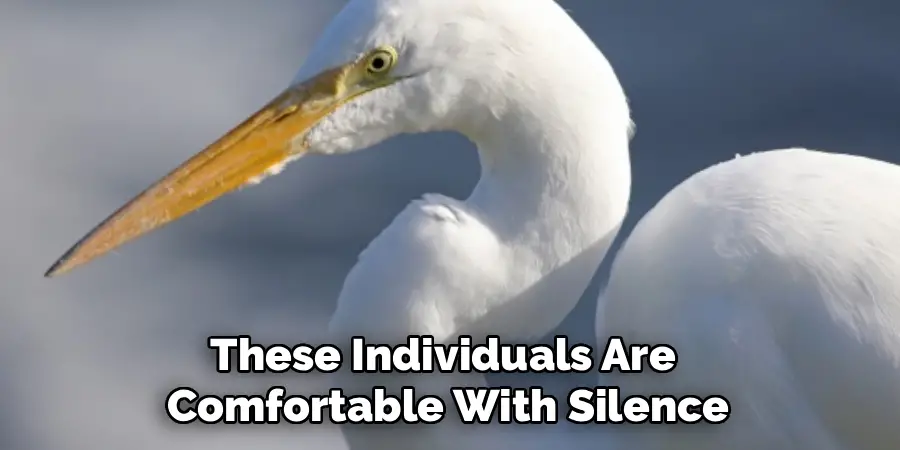
The Great Egret totem often appears to those who are seeking a deeper spiritual connection or who are learning to value solitude. These individuals are comfortable with silence. They do not feel the need to fill every quiet moment with chatter. They understand that wisdom speaks in whispers, and they are listening. If the Great Egret is your guide, you are being called to cultivate your inner peace and to trust in your own self-reliance.
The Solitary Path
Outside of the breeding season, Great Egrets are largely solitary birds. They hunt alone and often roost alone. This solitary nature is a key aspect of the totem. It teaches the strength found in self-reliance. Egret people are comfortable in their own company; they do not need constant validation from others to feel whole. This totem empowers you to walk your own path, even if you must walk it alone for a time. It reminds you that solitude is not loneliness, but a sacred space for growth and reflection.
Grace Under Pressure
Perhaps the most admirable trait of the Egret totem is grace under pressure. Even when hunting or dealing with territorial disputes, the bird remains elegant. For the totem carrier, this translates into the ability to navigate emotional turmoil or stressful situations without losing their cool. They do not get dragged down into the mud of drama. Instead, they stand above it, observing with detachment and acting with dignity. They teach us that we can handle difficult emotions without drowning in them.
Great Egret Spiritual Meaning, Symbolism and Totem in Balance
A common sight is the Great Egret standing on one leg, perfectly balanced, often with its neck tucked in. This physical posture is a powerful symbol of equilibrium. It represents the need for stability in our lives—the ability to find our center even when the ground beneath us is shifting or wet.
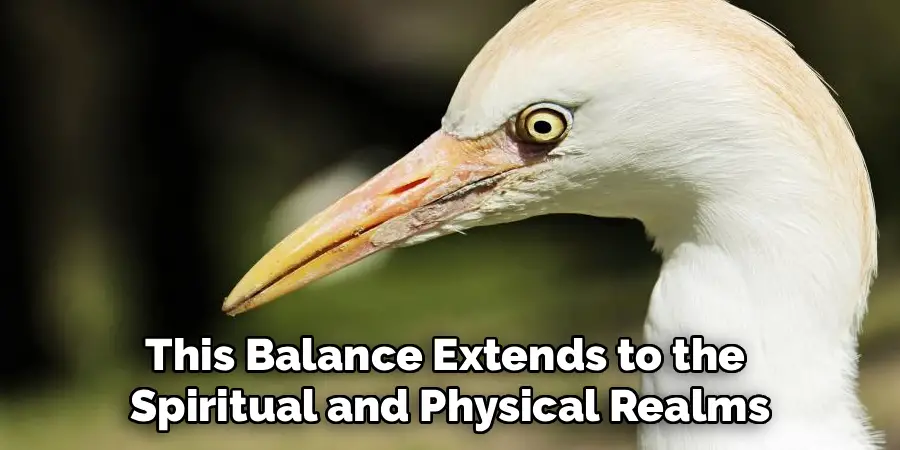
This balance extends to the spiritual and physical realms. The Egret stands in water (emotions/spirit) but is an air-breathing creature of the sky (intellect/mind). It teaches us to balance these two aspects of our nature. We must be able to feel deeply without losing our rationality, and we must be able to think clearly without becoming emotionally detached.
Rooted yet Fluid
The Egret is rooted in the mud, yet it flows with the wind and water. This teaches the lesson of being “rooted yet fluid.” We need strong foundations and core values (the roots), but we must also remain flexible and adaptable (the fluid). Rigidity leads to breaking; fluidity allows for survival. The Egret encourages us to stand firm in who we are while remaining open to the flow of life.
Cultivating Stillness with the Great Egret
In a noisy world, accessing the stillness of the Great Egret can be a transformative practice. This meditation is designed to help you embody the bird’s patient, observant energy to find clarity and peace.
Step 1: Finding Your Wetland
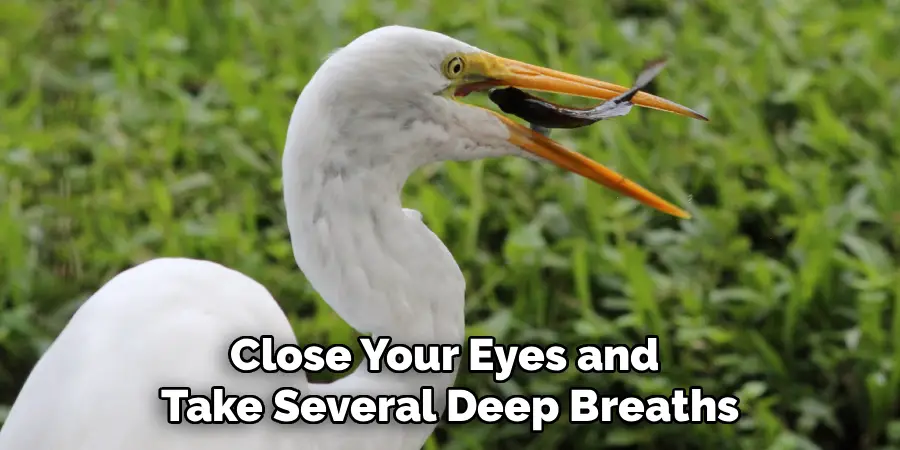
Begin by finding a quiet place where you can stand comfortably. Close your eyes and take several deep breaths. Visualize yourself standing in a calm, beautiful wetland. The water is cool and clear, reaching just up to your knees. Reeds whisper gently in the breeze around you. Feel the soft mud beneath your feet, grounding you to the earth. You are safe, solitary, and at peace.
Step 2: The Stance of Dignity
Physically adjust your posture to mimic the Egret. Stand tall, lengthening your spine as if it were the long, elegant neck of a bird. Relax your shoulders, but keep your head held high. Feel a sense of royal dignity washing over you. You are not tense; you are poised. You are a being of grace and power.
Step 3: Entering the Stillness
Now, choose a single point in your mind’s eye to focus on—perhaps a lotus flower floating on the water in your visualization. Become completely motionless. Still your body. Quiet your mind. Focus only on your breath and that single point. If thoughts arise, let them float past like leaves on the water. Do not chase them. Return to the stillness. Remain in this state of “active waiting.”
Step 4: The Strike of Insight
Hold this stillness. Trust the silence. You are waiting for a “fish”—a moment of insight, a solution to a problem, or simply a feeling of deep peace. When a clear thought or answer arises from the silence, acknowledge it sharply and clearly. Capture it with your awareness. This is the reward for your patience.
Step 5: Graceful Return
When you are ready, slowly begin to bring movement back into your body. Move deliberately and gracefully, like the Egret stepping through the water. Do not rush. Open your eyes, carrying that sense of calm focus and dignity back into your surroundings. Remember that you can return to this inner stillness whenever the world becomes too loud.
The S-Curved Neck: Flexibility and Kundalini
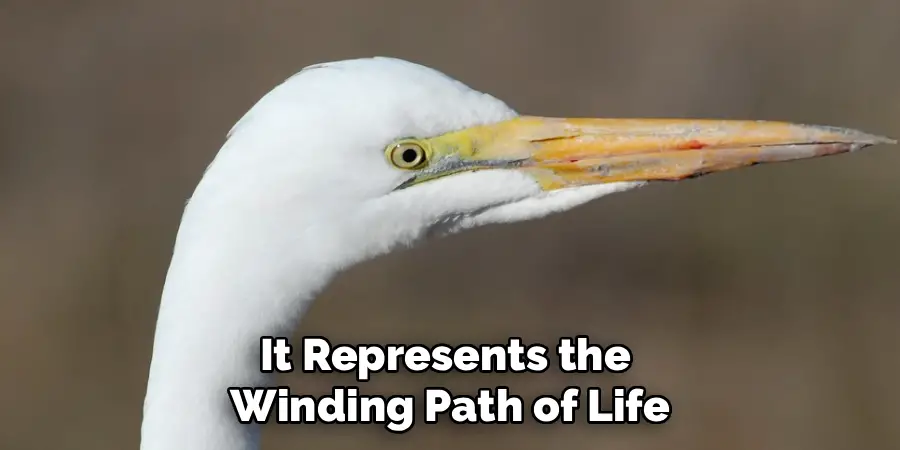
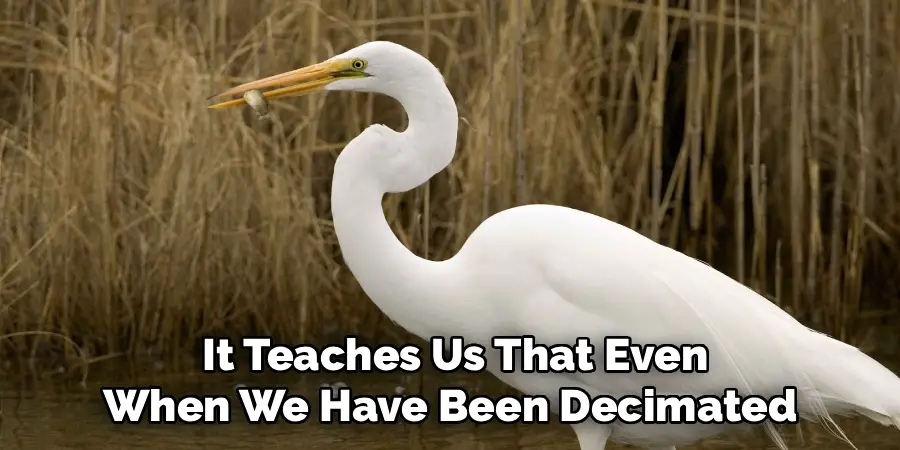
The Great Egret’s neck is longer than its body, and it is almost always held in a distinct ‘S’ curve. This shape is significant. In many esoteric traditions, the serpent or the curved line represents the Kundalini energy—the life force that lies coiled at the base of the spine, waiting to rise.
The Egret’s neck symbolizes this potential energy. It represents the winding path of life, which is rarely a straight line. It teaches us to be flexible in our approach, to bend without breaking.
Uncoiling Potential
When the Egret strikes, that ‘S’ curve uncoils with incredible speed to extend the neck to its full length. This action symbolizes the sudden release of stored potential. It reminds us that our spiritual power is often coiled and waiting. We may spend long periods in stillness, gathering our strength, only to experience a sudden, rapid expansion of consciousness or a breakthrough in our lives. The Egret teaches us to trust this process of coiling and uncoiling, of rest and action.
Breeding Plumes: The Aigrettes of Wisdom
During the breeding season, Great Egrets develop magnificent, long, lace-like plumes called aigrettes that trail from their backs. These feathers are incredibly delicate and beautiful. Tragically, in the late 19th and early 20th centuries, millions of Egrets were killed so these plumes could be used to decorate ladies’ hats, driving the species to the brink of extinction.
Spiritually, these plumes symbolize the beauty of wisdom and maturity. They appear only when the bird is ready to create new life. They represent the gifts we develop as we grow and evolve. The tragic history of the plumes also serves as a reminder of the need to protect what is sacred.
Protecting the Sacred
The resurgence of the Great Egret population after conservation laws were passed is a powerful symbol of resurrection and survival. It teaches us that even when we have been decimated or exploited, we can recover. The plumes remind us to protect our own unique gifts—our inner beauty and wisdom—from exploitation by the world. We must honor our own values and ensure that our “feathers” are displayed only for those who respect their sanctity.
Dreams of the Great Egret: Messages of Clarity
When the Great Egret appears in your dreams, it acts as a messenger from your higher self. It usually brings guidance related to patience, clarity, and independence.
If you see a Great Egret standing still in your dream, it is a message to stop rushing. You may be trying to force a situation that needs time to mature. The dream is advising patience and reflection. Wait for the water to clear before you act.
A flying Great Egret is a symbol of freedom and a higher perspective. It suggests that you are rising above a problem or embarking on a journey toward higher consciousness. It can also indicate that you are ready to leave a difficult situation behind and fly toward clearer skies.
If the Egret is hunting or catching a fish, it is a very positive omen. It indicates that a profitable opportunity is within reach. However, it comes with a condition: you must remain focused and strike at the right moment. Success is yours if you are disciplined.
Connection to Water and Emotion
We cannot discuss the Egret without returning to its connection to water. While it breathes air, it makes its living in the water. Spiritually, this signifies a deep relationship with the emotional body. The Egret wades through the water, but it does not swim; it keeps its feathers dry.
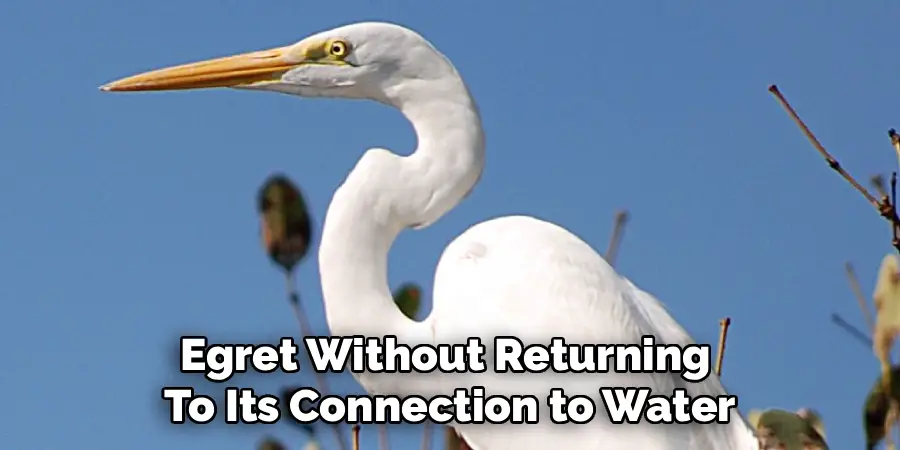
This is a crucial distinction. It teaches us to navigate the realm of emotions—our own and others’—without being submerged or overwhelmed by them. We can be present with grief, anger, or sadness (the water) without letting it consume us. The Egret represents healthy emotional boundaries. It shows us how to stand in the feelings, acknowledge them, and extract wisdom from them, while still maintaining our own stability and dryness.
Conclusion
The Great Egret spiritual meaning, symbolism and totem are a beacon of calm in a turbulent world. This elegant bird, with its snowy plumage and deliberate grace, teaches us that true power does not shout. It waits. It observes. It strikes with precision.
By embracing the energy of the Great Egret, we learn to cultivate patience, to value our own company, and to keep our spirits pure even when standing in the mud of life. It reminds us that we have the power to rise above our circumstances, to see clearly through the dark waters, and to act with divine timing. Let the Great Egret inspire you to slow down, stand tall in your own dignity, and trust that if you wait with awareness, exactly what you need will swim right to you.
