

Standing near the edge of a slow-moving African river, an oddly shaped avian figure pauses to study the water. The Hammerkop is an industrious creature known widely for its remarkable silhouette and obsessive construction habits. Observers frequently overlook this brown, medium-sized waterbird in favor of more brightly colored species. Such dismissal often proves short-sighted.
Understanding the Hammerkop Spiritual Meaning, Symbolism and Totem provides a remarkably nuanced perspective on how we structure our own lives. This analysis examines the psychological weight of the bird’s defining characteristics, exploring its potential messages regarding sustained effort and self-reflection.
Creatures that invest massive amounts of energy into altering their physical environment tend to carry heavy symbolic significance. They serve as mirrors for human ambition. By studying the deliberate methods of this wetland architect, we might uncover strategies for fortifying our personal foundations. The bird appears to offer a distinct conceptual framework for individuals struggling to manifest long-term goals. We will closely analyze the biological realities of this species to ground our spiritual interpretations in observable fact.
The Enigmatic Hammerkop: Understanding the Bird
Interpreting an animal’s symbolic resonance requires a preliminary grasp of its actual behavior. Abstract spiritual claims lack weight if they completely ignore the physical reality of the creature in question. The Hammerkop presents a highly specific set of evolutionary adaptations that inform its mythological status.
Distinctive Physical Appearance
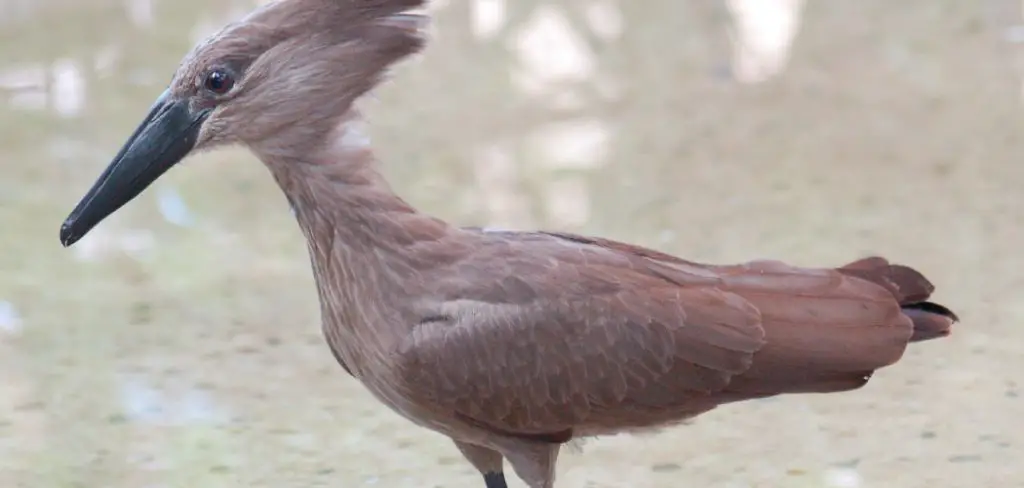
Taxonomists have historically struggled to classify this peculiar bird. It occupies its own unique family, sitting somewhat awkwardly between pelicans and herons. Its physical profile is instantly recognizable. A heavy, backward-pointing crest of feathers aligns perfectly with a long, thick bill, giving the entire head the distinct shape of an anvil or a blacksmith’s hammer.
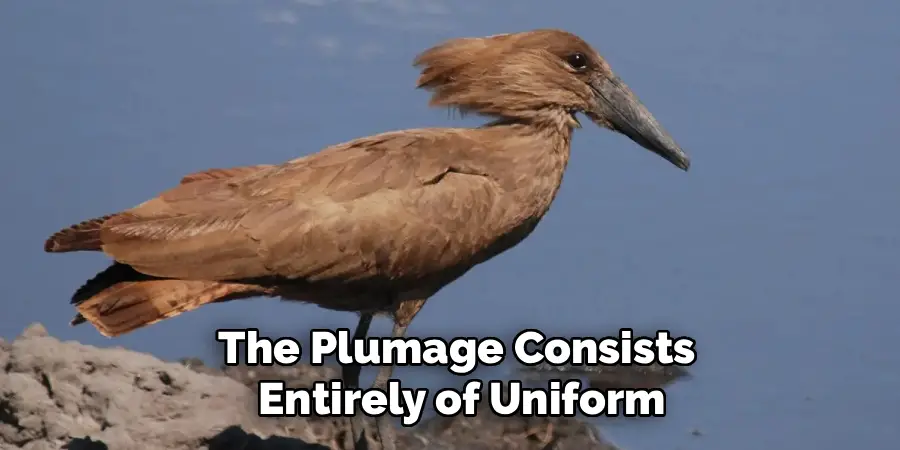
This is not a conventionally beautiful animal. The plumage consists entirely of uniform, drab browns. It lacks the iridescent flash of a kingfisher or the elegant starkness of an egret. Consequently, the bird’s visual impact relies entirely on its strange geometry rather than aesthetic charm. This functional, unpretentious appearance heavily influences how folklore interprets its presence.
The Master Architect: Its Extraordinary Nest
Behaviorally, the bird is defined almost entirely by its construction habits. It builds structures that defy the standard proportions of avian engineering. A single Hammerkop nest can measure over five feet across and weigh upwards of a hundred pounds. These massive domes are typically constructed in the fork of a tree overhanging water.
The building process requires thousands of individual trips to gather twigs, mud, and grass. A finished structure features a complex internal architecture, including a mud-plastered central chamber accessed through a narrow, highly defensible side tunnel.
The sheer scale of this endeavor might suggest a level of foresight rarely attributed to birds. These nests are so structurally sound that they frequently support the weight of humans. They essentially alter the local ecosystem, providing secondary housing for smaller species once abandoned.
Core Symbolic Meanings of the Hammerkop
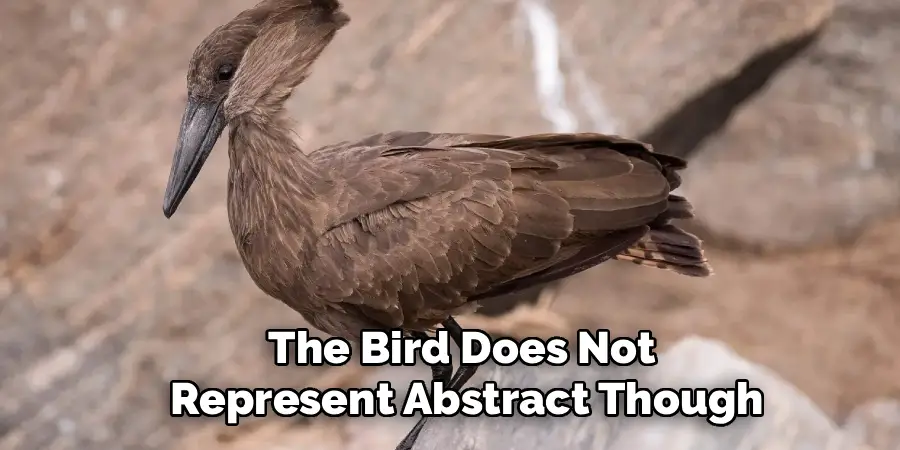
Translating these biological facts into spiritual concepts reveals a creature deeply associated with the physical manifestation of ideas. The bird does not represent abstract thought. It represents the grueling transition from concept to reality.
The Symbolism of Diligence and Hard Work
The most immediate lesson drawn from this animal involves the necessity of sheer, unglamorous effort. Constructing a hundred-pound fortress out of individual twigs requires a staggering degree of persistence. The Hammerkop teaches that substantial achievements are rarely the result of sudden inspiration. They emerge from monotonous, repetitive labor over extended periods.
When society increasingly prioritizes rapid success and immediate gratification, this bird stands as a counter-argument. It suggests that skipping the foundational work inevitably leads to a fragile structure. True stability is earned through the slow accumulation of small, deliberate actions. Acknowledging this reality could relieve the anxiety many feel when their personal projects fail to materialize overnight.
Protection, Security, and Creating a Safe Haven
The architecture of the nest speaks volumes about the instinct to defend what is vulnerable. The narrow entrance tunnel and the thick, plastered walls are specifically designed to thwart predators like snakes and monitor lizards. Symbolically, this behavior translates into the psychological concept of boundary setting.
The bird prompts us to examine how we safeguard our own energy. Creating a secure environment often requires actively building defenses around our emotional lives. A safe haven does not magically appear. It must be intentionally constructed. This symbolism might indicate that you hold the responsibility for fortifying your personal space against toxic influences or overwhelming external demands.
The Duality of Vanity and Self-Reflection
Folklore frequently portrays the Hammerkop as a deeply vain creature. Because it hunts in shallow water, it spends hours essentially staring at its own image. Local myths sometimes suggest the bird is admiring its unusual crest.
We can interpret this behavior through two opposing psychological lenses. On one hand, it serves as a warning against the paralyzing effects of narcissism. Becoming obsessed with one’s outward appearance or social standing prevents actual forward movement.
Conversely, this same behavior points toward the profound value of introspection. Staring into the water can represent a necessary period of deep self-examination. Evaluating your own motives honestly remains a critical component of personal growth.
The Hammerkop as a Spirit Animal
An animal typically emerges as a spiritual guide when its specific characteristics address a current deficit in the observer’s life. The arrival of this heavy, industrious bird carries a highly specific diagnostic weight.

When the Hammerkop Guide Appears
You are unlikely to encounter the energetic presence of this bird during periods of carefree relaxation. It tends to make itself known when you are standing at the precipice of a massive undertaking. If you are preparing to start a business, write a novel, or buy a home, the Hammerkop may appear to offer structural support.
It also arrives when an existing foundation shows signs of collapse. If your current routines are failing to protect you from stress, the guide steps forward. It acts as an architectural consultant for those who realize their current life structure can no longer support their evolving needs.
Messages Your Hammerkop Guide Brings
The primary directive from this guide involves focusing entirely on the process rather than the final product. It asks you to stop worrying about the finished roof and concentrate solely on laying the next brick. The sheer scale of your ambitions might be causing paralysis. The bird reminds you that every massive structure is composed of singular, manageable pieces.
Additionally, the guide often delivers a blunt message regarding security. It might be prompting you to evaluate the “walls” you have built around your family or your creative ideas. Are they thick enough to withstand external criticism? If not, it is time to gather more mud and reinforce the perimeter.
A Step-by-Step Guide to the Hammerkop Spiritual Meaning, Symbolism and Totem
Integrating the heavy, deliberate energy of this builder into your daily routine requires active participation. Passive meditation rarely suffices when dealing with an animal so closely tied to physical labor. The following sequence provides a practical framework for channeling the bird’s unique psychological offerings.
Step 1: Meditate on the Concept of “Building”
Begin by evaluating your current architectural projects in a metaphorical sense. Find a quiet space and visualize the massive, dome-like nest of the Hammerkop. Ask yourself what you are currently attempting to construct. This could be a career path, a romantic relationship, or a new physical skill.
Be fiercely honest about the quality of the materials you are using. Are you attempting to build a permanent structure using cheap, temporary habits? Identifying the specific nature of your “build” dictates how you apply the bird’s energy moving forward.
Step 2: Engage in a ‘Nest-Building’ Activity
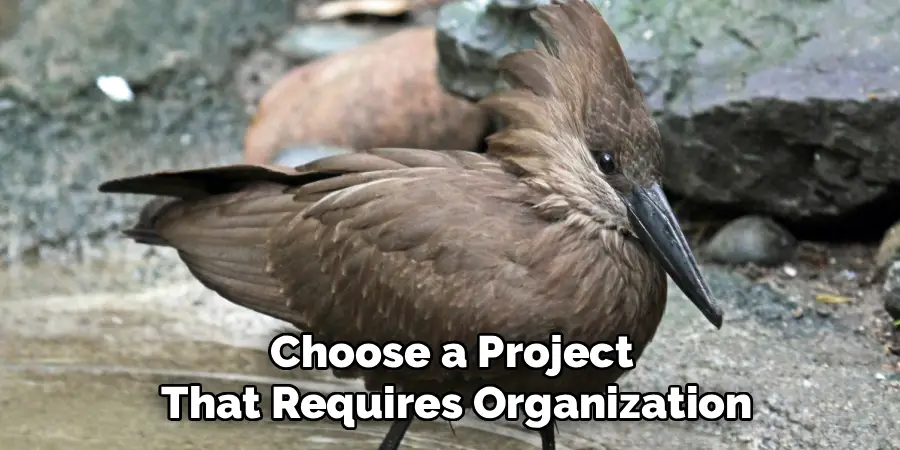
Theoretical understanding holds little value without physical execution. You must mimic the bird’s industrious nature through a tangible task. Choose a project that requires organization and structural improvement. This might involve completely reorganizing a chaotic home office, drafting a rigorous financial budget, or finally repairing a broken gate.
The specific activity matters less than the intention behind it. You are consciously engaging in physical labor to improve the security and efficiency of your immediate environment. This action signals to your subconscious that you are ready to do the heavy lifting required for stability.
Step 3: Practice Reflective Journaling
The bird’s association with water and reflections necessitates a period of deep introspection. Open a notebook and confront the concept of vanity versus self-awareness. Write down exactly how you perceive your own identity. How much of your daily energy is spent maintaining a specific image for other people?
The Hammerkop peers into the water to find sustenance, not just to admire itself. Your journaling should aim to extract actual nourishment from your self-reflection. Identify one genuine character flaw and outline a methodical plan to address it.
Step 4: Fortify Your Personal ‘Nest’
Take a specific, localized action to enhance your psychological defenses. The bird builds a narrow tunnel to keep predators at bay. You must construct a similar barrier against the forces that drain your time. This could mean declining a social invitation that you know will cause anxiety.
It might involve silencing your work phone after a certain hour in the evening. Establishing a firm, undeniable boundary creates the safe internal chamber necessary for your ideas to incubate without interference.
Step 5: Acknowledge Your Community and Collaborators
While the Hammerkop builds its massive home alone or with a single mate, the resulting structure inevitably impacts the broader ecosystem. Weaver birds, monitor lizards, and eagle owls frequently utilize abandoned Hammerkop nests. Recognize that your hard work eventually ripples outward.
Take a moment to acknowledge the individuals who indirectly support your building process. Expressing gratitude to a mentor or a patient spouse grounds your ambition in communal reality. It prevents the isolation that sometimes accompanies intense, focused labor.
The Hammerkop Totem Animal
A totem animal represents a permanent psychological architecture. Individuals born with this energetic signature interact with their surroundings in highly predictable, deeply stabilizing ways.
Traits of a Hammerkop Person
Someone embodying this totem is rarely the most charismatic or flashy individual in a room. They do not demand the center stage. Instead, they operate as the quiet, reliable engine of their social or professional circles. These individuals possess a remarkable capacity for sustained effort. They can endure long periods of tedious work without losing focus, driven by a clear vision of the final structure.
Their minds function like blueprints. They naturally break complex problems down into sequential steps. A Hammerkop person is fiercely protective of their home environment, often spending considerable resources making their physical space as comfortable and secure as possible. They value utility over aesthetics. If a tool or a relationship looks beautiful but fails to perform its structural duty, they will discard it without hesitation.
Invoking the Power of Your Hammerkop Totem
You do not need to possess this totem inherently to borrow its strength. You can invoke this specific energy when facing a daunting, multi-year commitment. If you are entering a rigorous academic program or attempting to pay off massive debt, call upon the bird’s stamina. It provides the psychological weight necessary to ignore the desire to quit when the work becomes monotonous.
The energy is also highly effective when you feel overexposed. If your public life is encroaching too heavily on your private peace, visualizing the impenetrable mud walls of the nest can help you mentally withdraw and reestablish your boundaries.
Hammerkop in Dreams and Folklore
The subconscious mind frequently utilizes the heavy imagery of this bird to deliver warnings or confirmations regarding our waking lives. Its presence in cultural mythology further underscores its psychological significance.
Dreaming of a Hammerkop Building Its Nest
Witnessing the bird actively carrying twigs or mud in a dream generally serves as a powerful omen of preparation. The dream suggests that your current struggles are not pointless. The tedious labor you are currently enduring is actively creating a solid foundation for future success. It appears to indicate that you must trust the slow process of accumulation. Refrain from attempting to rush the outcome, as the structural integrity of your plans depends on your current attention to detail.
The Hammerkop and Its Reflection in a Dream
If the dream features the bird staring motionlessly into a pool of water, the subconscious is likely demanding an audit of your self-image. This scenario frequently suggests that you are avoiding a difficult truth about your own behavior. Are you too focused on how your project looks to outsiders, rather than how it actually functions? The still water asks you to look past the surface ripples and examine the murky depths of your true motivations.
The Bird of Lightning and Other Beliefs
Across various regions of Africa, the Hammerkop holds a fearsome and highly respected position in local folklore. It is frequently referred to as the “Lightning Bird.” Many traditional beliefs assert that destroying a Hammerkop nest will invite a devastating lightning strike upon the offender’s home. The bird is sometimes viewed as an omen of death or profound transition.
This intense cultural reverence points directly to the power of the things we build. The mythology suggests that a structure created with that much concentrated effort possesses its own inherent magic. It commands respect. Translating this folklore into a modern psychological context reminds us to treat our own long-term creations with reverence. Do not casually dismantle the boundaries or the routines you have worked so hard to establish.
Conclusion
We frequently obsess over the speed of our progress, assuming that rapid advancement indicates success. The strange, anvil-headed bird of the African wetlands entirely dismantles that assumption. The Hammerkop Spiritual Meaning, Symbolism and Totem guides us back toward the profound value of slow, deliberate construction.
By embracing the bird’s industrious nature, its architectural brilliance, and its protective instincts, we learn to navigate the complexities of building a secure life. The next time you feel overwhelmed by the sheer scale of your ambitions, consider the massive nest suspended above the river. Remember that even the most impenetrable fortress is built just one small twig at a time. Establish your boundaries, confront your reflection honestly, and return to the quiet, dignified work of laying your foundation.

About
Jennifer Branett is a distinguished figure in the world of Garden design, with a decade of expertise creating innovative and sustainable indoor solutions. His professional focus lies in merging traditional craftsmanship with modern manufacturing techniques, fostering designs that are both practical and environmentally conscious. As the author of garden, Jennifer delves into the art and science of garden-fix, inspiring artisans and industry professionals alike.
Education RMIT University
(Melbourne, Australia) Associate Degree in Design (Jennifer Branett) Focus on sustainable design, industry-driven projects, and practical craftsmanship. Gained hands-on experience with traditional and digital manufacturing tools, such as CAD and CNC software.
Nottingham Trent University
(United Kingdom) Bachelor’s in Garden and Product Design (Honors) Specialized in product design with a focus on blending creativity with production techniques. Participated in industry projects, working with companies like John Lewis and Vitsoe to gain real-world insights.Publications and Impact
In indoor, Jennifer Branett his insights on Garden design processes, materials, and strategies for efficient production. His writing bridges the gap between artisan knowledge and modern industry needs, making it a must-read for both budding designers and seasoned professionals.