

Long before you see the heavy, dark shape moving through the underbrush, you will likely hear its call. The sound is an unmistakable, resonant booming that seems to vibrate upward through the soles of your feet. Many individuals seeking signs from nature look instinctively toward the sky, hoping to catch a glimpse of a soaring eagle or a hovering hawk.

This upward fixation often causes us to miss the profound wisdom waiting directly on the earth. The Greater Coucal, a striking bird with deep chestnut wings and piercing ruby-red eyes, occupies this lower, grounded sphere. It acts as a powerful, frequently overlooked messenger for those willing to pay attention to the undergrowth.
This analysis attempts to unpack the Greater Coucal Spiritual Meaning, Symbolism and Totem, looking closely at what this specific creature might teach us about personal boundaries and temporal pacing. Understanding this unique bird offers a counter-narrative to our cultural obsession with speed and flight. By examining its distinct biological behaviors and the folklore surrounding its existence, we can perhaps unlock deep psychological insights regarding our own need for stability.
Getting to Know the Greater Coucal
Assigning abstract spiritual concepts to an animal without first understanding its physical reality usually results in a shallow interpretation. We must ground our symbolic reading in the actual, observable life of the creature.
Distinctive Appearance and Traits
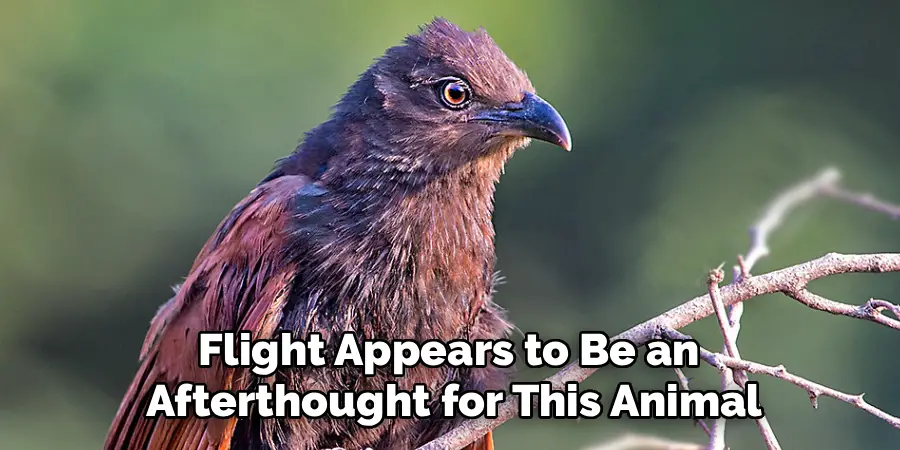
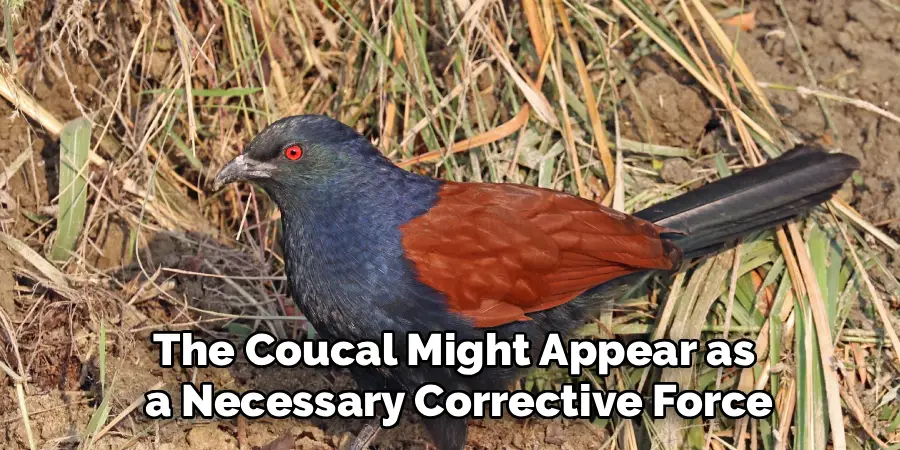
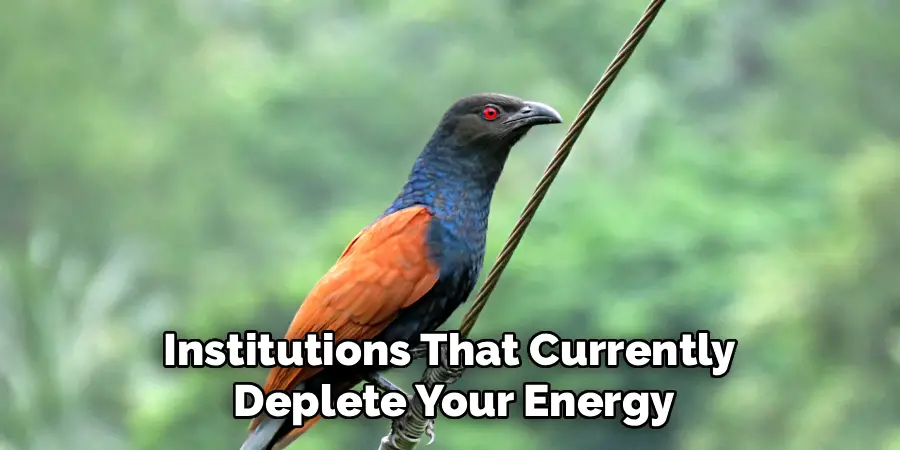
The Greater Coucal presents a visually arresting profile. It is a large bird, somewhat crow-like in its heavy silhouette, though it belongs to the cuckoo order. Its plumage features a stark contrast between a glossy, iridescent black body and rich chestnut wings. The most striking physical feature, however, remains its eyes. They are a brilliant, unblinking red.
Interestingly, while classified as a cuckoo, the Greater Coucal entirely rejects the parasitic nesting habits famously associated with its taxonomic cousins. It does not lay its eggs in the nests of other species. It builds its own nest and raises its own young. This biological autonomy might suggest an underlying theme of taking personal responsibility for one’s creations rather than outsourcing the labor to the surrounding community.
Unique Behaviors: Ground-Dwelling and a Deep Call
Flight appears to be an afterthought for this animal. The Coucal prefers to navigate its environment on foot. It walks with a deliberate, sometimes clumsy gait through tall grasses and dense thickets, searching for insects, small reptiles, and occasionally the eggs of other birds. When it does fly, the movement is labored and brief.
Its vocalization commands attention. The low, descending “coop-coop-coop” carries over vast distances, echoing through humid woodlands. This call does not sound like a standard avian melody. It feels primal. It sounds like water dropping into a deep, hollow cavern. This specific auditory signature forms the foundation of much of its protective symbolism in native folklore.
Core Spiritual Meanings of the Greater Coucal
Analyzing the daily survival strategies of the bird reveals several distinct philosophical themes. These concepts often resonate with individuals who feel fundamentally disconnected from their immediate physical reality.
The Symbolism of Grounding and Connection to Earth
Our modern era aggressively champions ascension. We are constantly pressured to climb corporate ladders, elevate our consciousness, and rise above our circumstances. The Greater Coucal offers a radically different proposition. Its terrestrial nature serves as a heavy, necessary anchor. It suggests that true strength comes from descending into the reality of the present moment.
When an animal refuses to fly away from danger, preferring instead to navigate the tangled brush, it teaches the value of holding your ground. This symbolism indicates that building a secure psychological foundation requires getting your hands dirty. You cannot bypass the slow, tedious work of emotional maturation by simply floating above the conflict.

Protection and Warding Off Negativity
The resonant voice of the Coucal has long been interpreted as a shield against malevolent forces. The deep frequency of its call vibrates at a pitch that many cultures associate with clearing stagnant energy from a physical space.
We might view this protective quality as an instruction on how to manage our own personal boundaries. The bird does not attack aggressively without provocation. It simply announces its massive presence. This behavior suggests that clearly stating your limits using a calm, unwavering voice is often enough to deter those who would drain your resources. Establishing boundaries does not require hostility; it merely requires absolute clarity.
The Message of Soul-Searching and Inner Vision
Those ruby-red eyes are impossible to ignore. In symbolic language, red frequently correlates with vitality, buried passion, and intense inner vision. The Coucal peers out from the shadows of the grass with an intensity that feels almost interrogative.
Encountering this gaze, whether in waking life or through meditation, could prompt a period of intense soul-searching. It asks you to look beyond superficial social interactions. The bird’s visual intensity appears to challenge the observer to acknowledge their own hidden desires. What truths are you keeping buried in the undergrowth of your subconscious? The Coucal demands that you drag those realities out into the open.
The Greater Coucal as a Spirit Animal
An animal typically emerges as a spiritual guide when its specific evolutionary traits mirror an internal deficit within the human observer. The arrival of the Coucal carries a specific diagnostic weight.
When the Coucal Spirit Animal Arrives
You will rarely feel a connection to this bird during periods of hyper-productivity or intense social extroversion. It tends to make its presence known when your energy is severely scattered. If you are suffering from chronic anxiety, jumping rapidly between half-finished tasks, the Coucal might appear as a necessary corrective force.
It also arrives when you are actively avoiding a difficult confrontation. If you have allowed others to slowly erode your personal space, the bird steps forward to remind you of your own latent power. It acts as an anchor for those who feel they are drifting aimlessly through their professional or personal commitments.
Key Messages from Your Coucal Guide
The primary directive from this guide is simple: decelerate. The Coucal asks you to abandon the frantic pace dictated by external pressures. Walking your path deliberately ensures that you do not miss vital pieces of information hidden along the trail.
Furthermore, the guide brings a reminder regarding self-sufficiency. Just as the bird builds its own nest, you are being called to take ownership of your current predicament. Stop waiting for an external savior to fix the structural issues in your life. You possess the necessary tools to assemble your own security.
A Step-by-Step Guide to the Greater Coucal Spiritual Meaning, Symbolism and Totem
Integrating the heavy, earthy energy of this bird into your daily routine requires intentional practice. The following sequence provides a practical framework for connecting with the Coucal’s unique psychological offerings.
Step 1: Connect with its Resonant Voice
Auditory meditation often bypasses the analytical mind entirely. Locate a high-quality field recording of the Greater Coucal’s call. Sit quietly in a dimly lit room and play the sound through a speaker capable of producing rich low frequencies. Do not analyze the rhythm.
Simply allow the booming “coop” to vibrate against your chest. This specific acoustic pattern naturally slows the human heart rate. It pulls your focus downward, away from the spinning anxieties of the mind, settling your energy heavily into your physical body.
Step 2: Practice Grounding Exercises
You must physically mimic the bird’s connection to the soil. Theoretical grounding holds little value without physical application. Remove your shoes and stand barefoot on natural terrain. The texture of the grass or dirt provides immediate tactile feedback. Imagine the heavy weight of the Coucal resting in the underbrush.
Visualize roots extending outward from your own heels, locking you into the earth. This practice is particularly vital after spending long hours engaged with digital screens, which artificially sever our connection to the physical environment.
Step 3: Journal on Boundaries and Personal Power
The protective nature of this animal requires serious intellectual engagement. Open a notebook and evaluate your current social ecosystem. Write down the names of individuals or institutions that currently deplete your energy. How are you failing to announce your presence?
The Coucal uses its deep voice to establish territory. Draft a specific, concrete script for how you will vocally assert your limits the next time those boundaries are tested. Writing the words down physically prepares the mind to deliver them verbally.
Step 4: Work with the Symbolism of its Red Eyes
Color psychology plays a significant role in this totem’s influence. The intense red of the bird’s iris connects directly to the concept of foundational life force. Spend several minutes meditating specifically on the color red.
You might hold a piece of carnelian or simply visualize a heavy crimson light radiating from the base of your spine. Ask yourself what passions you are currently ignoring out of fear or social conditioning. The Coucal’s gaze demands absolute honesty regarding what you actually desire from your life.
Step 5: Embody its Deliberate Pace
For a single day, consciously reject the impulse to rush. When you walk down a hallway, force yourself to move at half your normal speed. When you eat a meal, chew slowly and deliberately. The Greater Coucal does not sprint unless necessary.
By adopting this unhurried physical pacing, you signal to your nervous system that you are safe. This deliberate movement pattern drastically reduces baseline stress and allows you to observe subtle environmental details that panic usually obscures.
Understanding the Greater Coucal Totem Animal
A totem animal represents a permanent psychological architecture. Individuals who carry this specific energy interact with their community in highly predictable, deeply stabilizing ways.
Characteristics of a Coucal Person
Someone who embodies the Coucal totem is rarely the loudest person at a gathering. They do not require the center stage. Instead, they operate as the quiet, reliable foundation of their social circle. Friends naturally gravitate toward them during times of crisis because they project an aura of unshakeable calm.
These individuals are deeply intuitive. Because they observe rather than perform, they catch subtle shifts in human behavior that elude more extroverted personalities. They can be incredibly stubborn. Once a Coucal person makes a decision and sets their feet, moving them against their will is nearly impossible. They are fiercely protective of their family units and will use their voice with surprising, booming authority if someone threatens their inner circle.
Calling on the Coucal’s Power
You do not need to be born with this totem to borrow its strength. You can invoke this energy specifically when preparing for a difficult negotiation. If you anticipate a scenario where someone will try to rush your decision-making process, call upon the Coucal’s deliberate pacing. It provides the psychological weight necessary to sit in silence, forcing the other party to show their hand first. It is also an excellent energy to summon when you feel geographically or emotionally displaced, helping you establish a sense of home wherever you currently stand.
The Greater Coucal in Dreams and Omens
The subconscious mind frequently utilizes the heavy imagery of this bird to deliver warnings or confirmations regarding our waking lives.
Hearing a Coucal in Your Dream
Dreaming of an animal’s vocalization without seeing the creature is a relatively rare neurological event. If the deep, echoing call of the Coucal permeates your dreamscape, it generally serves as a severe prompt to listen to your gut instinct. The dream suggests that you already know the answer to a waking-life dilemma, but you are allowing external noise to drown out your internal certainty. The booming sound is your subconscious demanding to be heard.
Seeing a Coucal Cross Your Path
A physical encounter with the bird, especially if it steps out of the brush and crosses a path directly in front of you, is widely considered an omen of deceleration. It could indicate that you are rushing headlong toward a massive mistake. The bird physically blocks your trajectory, suggesting you need to stop, evaluate your surroundings, and check the structural integrity of your plans before taking another step forward.
Cultural Folklore and Beliefs
The Greater Coucal occupies a complex, sometimes contradictory space within the folklore of South and Southeast Asia. Locally known in many regions as the “Crow Pheasant,” it rarely escapes the notice of rural populations due to its size and distinct call.
In certain Indian traditions, the bird is associated with deep omens. The interpretation often depends heavily on the context of the sighting. Seeing the bird on the right side of a path might suggest impending good fortune or the successful completion of a journey.
Conversely, hearing its call from a specific cardinal direction during a specific time of day could be interpreted as a warning of approaching illness or conflict. This duality in the folklore reinforces the bird’s role as a neutral, objective messenger. It does not bring the luck; it merely reports the shifting energetic currents of the environment, asking the observer to adjust their behavior accordingly.
Conclusion
We frequently ignore the terrestrial in favor of the aerial, assuming that spiritual elevation requires us to leave the earth behind. The heavy, deliberate presence of the “Crow Pheasant” shatters that assumption. The Greater Coucal Spiritual Meaning, Symbolism and Totem guides us back downward. It teaches the profound value of an unhurried life.
By embracing the bird’s grounded nature, its protective vocalizations, and its piercing internal vision, we learn to navigate the tangled underbrush of our own psychology. The next time you feel the urge to rush past a difficult emotional obstacle, consider the slow, measured step of the Coucal, and remember that true power often lies in simply holding your ground.

About
Jennifer Branett is a distinguished figure in the world of Garden design, with a decade of expertise creating innovative and sustainable indoor solutions. His professional focus lies in merging traditional craftsmanship with modern manufacturing techniques, fostering designs that are both practical and environmentally conscious. As the author of garden, Jennifer delves into the art and science of garden-fix, inspiring artisans and industry professionals alike.
Education RMIT University
(Melbourne, Australia) Associate Degree in Design (Jennifer Branett) Focus on sustainable design, industry-driven projects, and practical craftsmanship. Gained hands-on experience with traditional and digital manufacturing tools, such as CAD and CNC software.
Nottingham Trent University
(United Kingdom) Bachelor’s in Garden and Product Design (Honors) Specialized in product design with a focus on blending creativity with production techniques. Participated in industry projects, working with companies like John Lewis and Vitsoe to gain real-world insights.Publications and Impact
In indoor, Jennifer Branett his insights on Garden design processes, materials, and strategies for efficient production. His writing bridges the gap between artisan knowledge and modern industry needs, making it a must-read for both budding designers and seasoned professionals.