

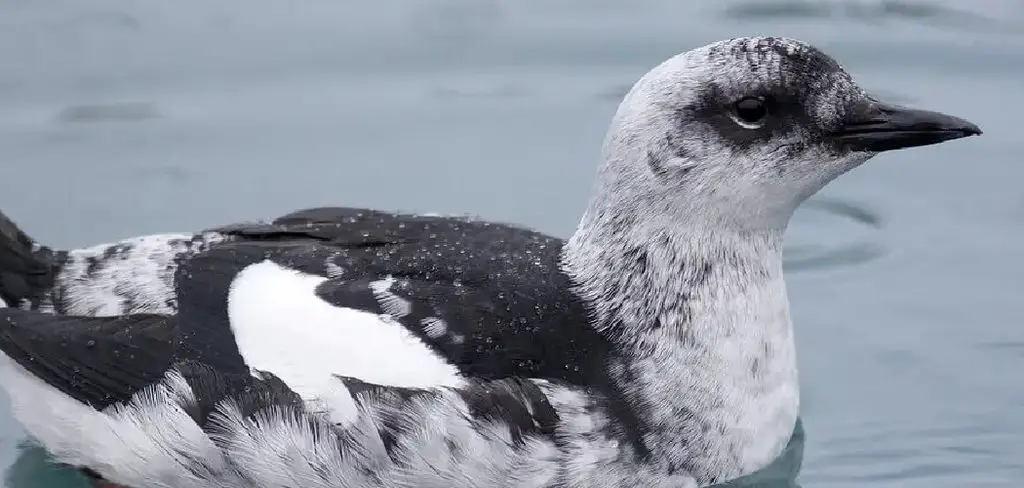
The little boat left Seahouses harbor just after nine, and the North Sea was the color of wet slate. Twenty minutes later, the Farne Islands rose out of the haze. I smelled them before I could really see them, a sharp, fishy tang carried on the wind.
Then the cliffs came into focus. Every flat inch of dark dolerite was covered in birds standing upright like tiny waiters in formal dress. Thousands of them, packed so tightly that their shoulders touched.
The noise was astonishing. It sounded less like birdsong and more like a crowd of old men laughing at a joke I couldn’t hear. A woman beside me leaned over the rail and said, “Guillemots. Smell’s the price of admission.”
I watched one bird shuffle to the edge of a ledge, lean forward and drop. It skimmed the swell for a moment, then vanished under the surface without a ripple. I kept waiting for it to reappear. It didn’t, not where I was looking.
That scene captures much of what this bird seems to represent. This article explores the Common Guillemot Meaning, Symbolism and Totem traditions tied to one of the most familiar seabirds of northern coasts. It begins with the bird itself, then moves through its spiritual meanings, its role as a spirit animal and totem, what an encounter might signify, and the cultural threads woven around it.
Getting to Know the Common Guillemot
One Bird, Two Names
The Common Guillemot, Uria aalge, is exactly the same species North Americans call the Common Murre. Britain and Ireland favor “guillemot,” while Canada and the United States usually say “murre.” The bird, of course, answers to neither.
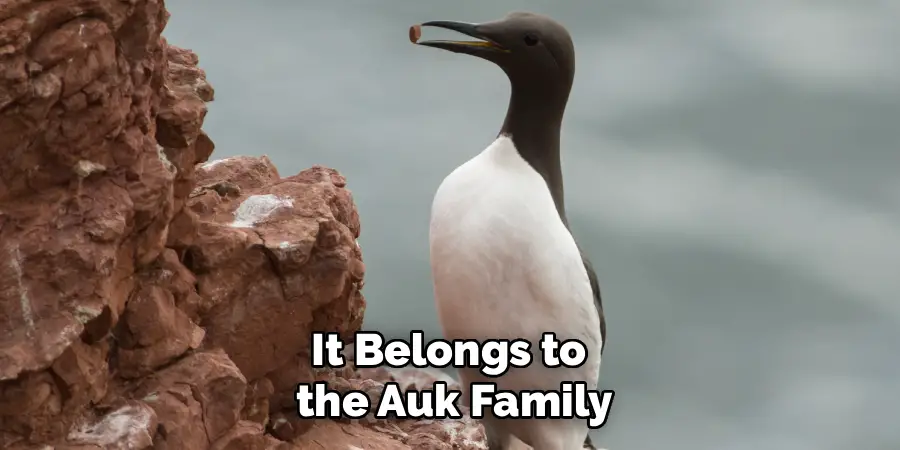
It belongs to the auk family, Alcidae, alongside puffins, razorbills and the closely related Thick-billed Murre. Unlike the smaller Cepphus guillemots, such as the Black Guillemot, it lives in vast cliff colonies instead of scattered crevices.
Where the Name Comes From
“Guillemot” is usually traced to the French name Guillaume, or William. It’s a slightly odd, almost affectionate label for a seabird. “Murre” is older and murkier, possibly imitating the birds’ low, purring calls.
Coastal communities invented plenty of local names too. “Willock” and “tinkershere” turn up in older records from different parts of Britain.
Appearance
In breeding season, the guillemot has a chocolate-brown head and back above a crisp white belly. Its bill is long, slim and dagger-like. Standing upright on a ledge, it looks remarkably like a small penguin, though the two are not closely related.
Some individuals carry a fine white ring around the eye with a thin line trailing backward. These “bridled” guillemots are a natural color form, not a separate species. They become more common the farther north you go, and they’re a favorite challenge for birdwatchers on colonies like those in Shetland.
Size and Build
This is a sizable auk, roughly 15 to 17 inches long. Its body is dense and torpedo-shaped. Its wings are short and narrow.
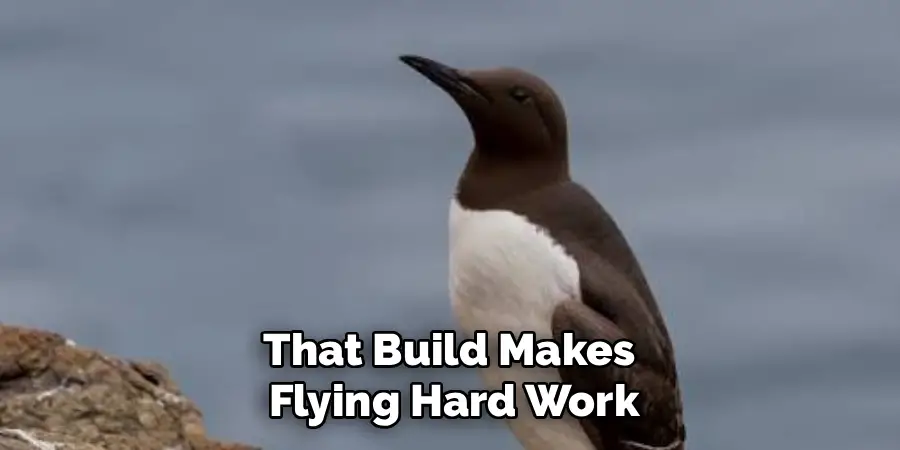
That build makes flying hard work. Underwater, though, the same shape turns into an advantage.
Where It Lives
The Common Guillemot breeds across the North Atlantic and the North Pacific. Atlantic colonies stretch from Portugal and Britain through Ireland, Norway, the Faroe Islands and Iceland to Newfoundland. Pacific colonies run from California up through Alaska and across to Russia, Japan and Korea.
Famous British and Irish sites include Bempton Cliffs, Skomer, Handa and Rathlin Island. In California, the Farallon Islands off San Francisco hold one of the largest colonies on that coast.
Behavior That Shapes Its Symbolism
Flying Beneath the Waves
Guillemots hunt by diving and “flying” underwater with their wings. They chase small fish such as sand eels, sprats, herring and capelin. Most dives are relatively shallow, but some birds have been recorded reaching depths of more than 500 feet.
A bird that clumsy in the air becoming that capable underwater is one of nature’s better plot twists.
Life on a Crowded Ledge
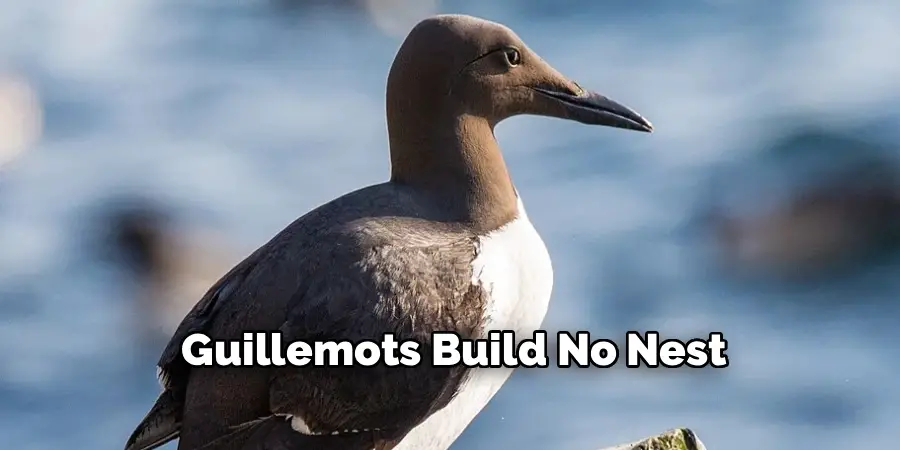
Guillemots build no nest. A female lays a single egg directly on bare rock, often on a ledge barely wide enough to stand on. Neighbors may be pressed so closely that they literally lean against each other.
That crowding appears to protect them. Gulls and other predators find it harder to reach an egg surrounded by a wall of sharp-billed adults.
The Remarkable Egg
The egg itself is a small wonder. It’s strongly pointed at one end, and scientists still debate exactly why. The shape may help it stay put on sloping rock, or perhaps keep it cleaner in a messy colony.
Each egg also carries its own pattern of speckles and scrawls, in colors ranging from white to blue-green to brown. Many researchers think these unique markings help parents recognize their own egg among thousands.
Gentle Neighbors
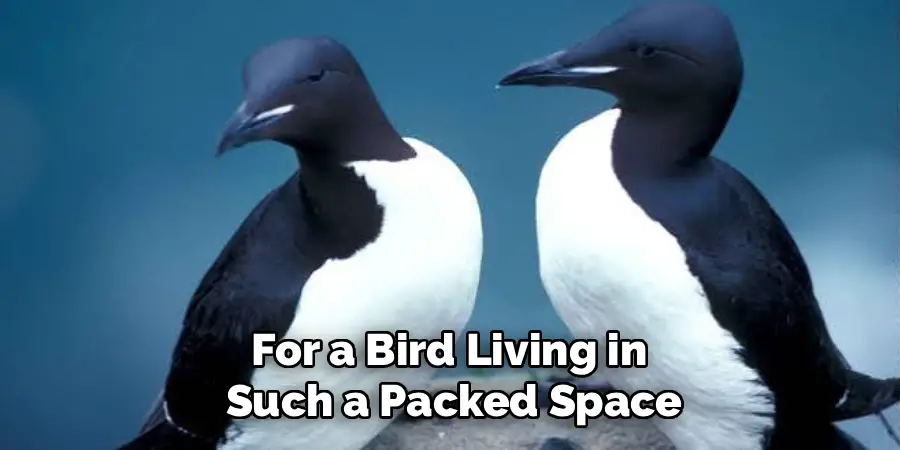
For a bird living in such a packed space, the guillemot can be surprisingly tender. Neighbors often preen each other’s heads and necks. Studies have suggested that birds who engage in more of this mutual grooming may squabble less.
It’s a small detail, but it changes how the colony looks. That roaring crowd turns out to have a softer side.
The Leap to Sea
At roughly three weeks old, long before it can truly fly, the chick leaves the ledge. Usually at dusk, it flutters and drops toward the water, sometimes from a great height. Its father typically follows it down.
From that moment, he raises the chick at sea alone for weeks. Together, they swim away from the colony, father calling and chick answering.
A Change of Coat
After breeding, guillemots molt into winter plumage. The throat and face turn white, with a thin dark line curving back from the eye. Many people seeing a winter bird for the first time assume it’s a different species.
Common Guillemot Meaning and Symbolism
Hidden Depths
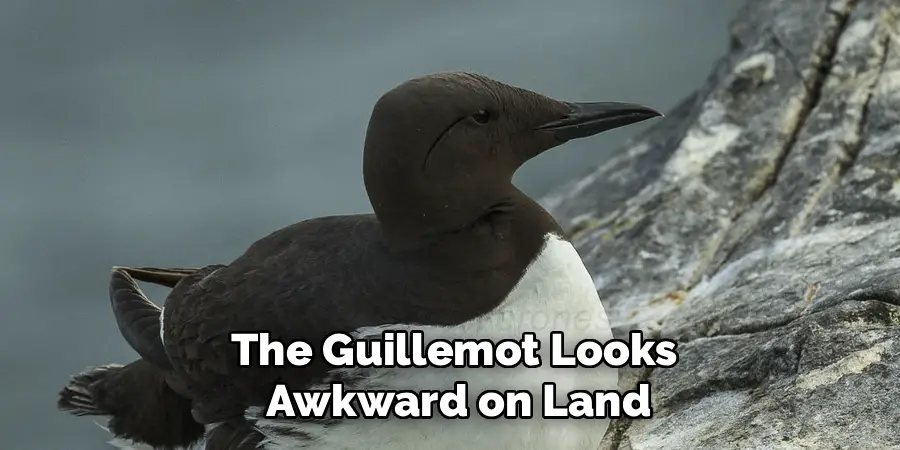
The guillemot looks awkward on land and labored in flight. Below the surface, it becomes something else entirely. Symbolically, that contrast may suggest that people often keep their greatest strengths out of view.
It can also be read as personal advice. The bird seems to encourage looking beneath the surface of a situation rather than judging it by first appearances.
The Duality of Land and Sea
This bird stands on stone, crosses the air and hunts underwater. It never fully commits to any one world. Many traditions associate the sea with emotion and the unconscious, and land with practical daily life.
A creature that moves between them so naturally could represent balance. Feeling deeply and living sensibly needn’t be rivals.
Community
Few birds embody community quite like this one. Thousands of pairs share narrow ledges, groom their neighbors and depend on shared vigilance. Belonging here isn’t optional. It’s how survival works.
The guillemot may speak to anyone who finds strength in a group. It also hints that community sometimes means tolerating noise and mess for the sake of shared safety.
Resilience
A chick jumping from a cliff before it can fly is about as clear an image of resilience as nature offers. It can’t control the fall. It goes anyway.
People facing changes they didn’t choose often find meaning in that moment. The guillemot suggests that feeling unready is not the same as being unable.
Transformation
The seasonal molt, from dark-faced summer bird to pale-faced winter bird, carries a natural message about change. You may look different from one chapter of life to the next. Something underneath stays the same.
The chick’s journey adds another layer. In a single evening, it trades rock for open ocean and never really looks back.
Passion Behind Reserve
The guillemot’s formal plumage gives it a buttoned-up, almost Victorian look. Yet its colonies roar with sound, and its pairs display real affection through preening and closeness.
That contrast may stand for warmth hidden behind a composed exterior. Quiet, reserved people often recognize themselves here.
The Common Guillemot as a Spirit Animal
Who Feels Drawn to It
People who connect with this bird often describe themselves as loyal and steady, with a strong attachment to family or community. Many feel at home near the sea. Others simply admire creatures that thrive in hard places without fuss.
Spirit animal bonds are personal, though. No one needs to fit a checklist.
What It May Teach
As a guide, the guillemot seems to encourage persistence and cooperation. It suggests that effort counts even when it looks clumsy from the outside. It also models the value of small kindnesses within a crowded life.
Strengths of This Spirit
Those with guillemot energy may be dependable in a crisis. They tend to stay put, share the load and look after the people beside them. Patience in difficult conditions may also come naturally.
The Shadow Side
Every symbol has a flip side. Strong guillemot energy might lean toward conformity, staying on a crowded ledge long after it stops serving you. It could also show up as quietly overextending yourself for the group.
Spotting those patterns matters. Even guillemots eventually leave the cliff for open water.
The Common Guillemot as a Totem Animal
A Note on Totems
The concept of totems comes from specific Indigenous cultures, and modern spiritual use tends to be broader and more personal. With that respect in mind, a totem is usually understood as a lifelong symbolic companion rather than a passing messenger.
Traits of a Guillemot Totem Person
Someone who holds this bird as a totem may carry a calm, practical toughness through many seasons of life. They often feel most secure among close-knit people. Beneath that steadiness, many hold a capacity for depth that only appears when needed.
Living With This Totem
Honoring a guillemot totem might mean investing in your community and letting it support you in return. It could involve spending time on the coast or supporting seabird conservation. Joining a beach clean-up or reporting oiled birds are practical ways to give something back.
What It Means When a Common Guillemot Appears
A Prompt to Look Deeper
Seeing one may be read as an invitation to examine something more honestly. A decision or relationship might deserve attention beneath its surface.
A Call Toward Community
An encounter could also point toward the people around you. Perhaps it’s time to lean on them, or to offer the kind of shelter a crowded ledge provides.
Encouragement Before a Leap
If you’re standing at the edge of a big change, the guillemot’s story may feel especially fitting. The chick doesn’t wait for perfect readiness. It jumps, and someone follows.
Common Guillemots in Dreams
Dreaming of a diving guillemot might relate to emotions or memories you’ve pushed deep down. A packed cliff could reflect how you feel about family, work or social pressure. As with most dreams, your own feelings during it probably matter more than any fixed meaning.
A Caution Against Over-Interpreting
It’s worth staying grounded. Around major colonies, guillemots number in the tens or hundreds of thousands. Watching a raft of them from a ferry isn’t necessarily a cosmic sign. The meaning lives in what the moment stirs in you.
Cultural and Mythological References
The British Isles
Seabird colonies have shaped life on British and Irish coasts for centuries. On St Kilda, islanders famously climbed sheer cliffs to gather seabirds and eggs, and guillemots were among the species they relied on. Similar cliff-climbing traditions existed elsewhere, including the egg collectors who once worked the chalk cliffs at Bempton.
Detailed myths centered specifically on the guillemot, however, are thin in accessible folklore sources. Its cultural role there appears more practical than mythic.
Norse and North Atlantic Traditions
In Scandinavia, the bird is known by names like lomvi in Norwegian and langvía in Icelandic. In the Faroe Islands, fowling on bird cliffs has deep roots, and guillemots have long been part of island food traditions.
A defined role for the guillemot in Norse mythology isn’t well documented. It seems to belong to the everyday world of survival rather than the sagas.
Indigenous Coastal Peoples
Along the North Pacific, Indigenous peoples in Alaska and the Pacific Northwest have long lived alongside murres. Seabirds and their eggs were part of coastal subsistence, and colony seasons helped mark the turning year.
Specific spiritual stories about this species aren’t widely recorded in accessible sources. Inventing them would be disrespectful, so that gap deserves honesty.
A Modern Symbol of Ocean Health
The guillemot’s more recent history carries a heavier meaning. During California’s Gold Rush, commercial egg collectors stripped the Farallon Islands, and rival crews even came to blows in the so-called “Egg War” of 1863. Later, oil spills such as the Torrey Canyon in 1967 and the Exxon Valdez in 1989 killed huge numbers of murres.
In 2015 and 2016, a marine heatwave in the North Pacific was linked to a massive die-off, with tens of thousands of dead murres washing ashore. Because guillemots depend so heavily on small fish, they have become an informal barometer of ocean health. That may be their most important symbolic role today.
Conclusion
The Common Guillemot is noisy, crowded and a little ungainly on land. Yet it dives with real skill, lays one of the most beautiful eggs in the bird world and sends its chicks off cliffs before they can fly. Its colonies, for all their chaos, are full of quiet tenderness.
Exploring the Common Guillemot Meaning, Symbolism and Totem traditions reveals themes of hidden depth and community, along with resilience through change. As a spirit animal or totem, it seems to support people who stay steady and loyal while carrying more inside than they show.
If you ever stand on a northern cliff top in early summer, listen for that rolling, laughing roar. Somewhere on those ledges, a small chick may be getting ready to jump.
