

The tour boat had barely cleared the harbor at Utoro, on the Shiretoko Peninsula, when the guide pointed toward a dark cliff streaked with white. At first I saw only rock and spray. Then a black bird lifted off a ledge, low and fast, and landed on the water a few yards from the hull.
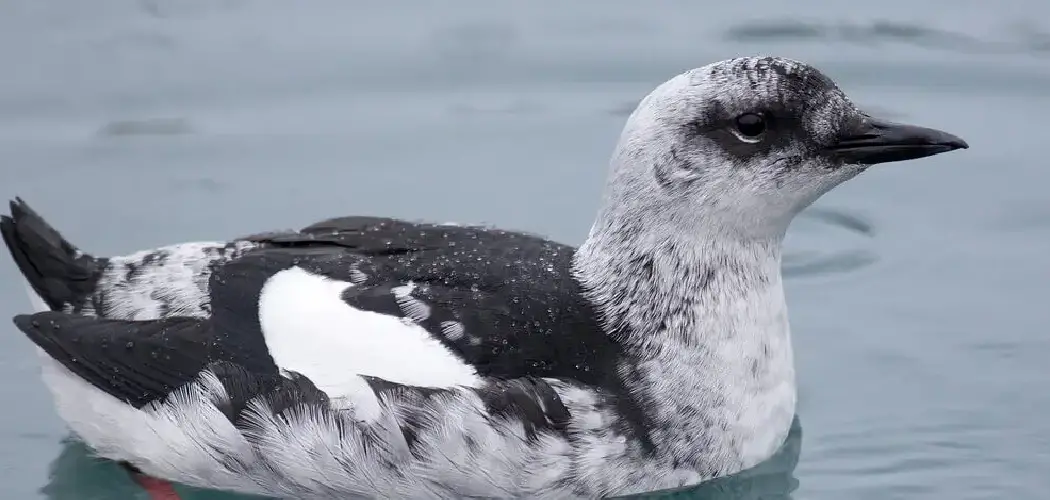
It turned its head, and I laughed out loud. A neat white ring circled its eye, trailing back in a thin line like the arm of a pair of reading glasses. The bird looked oddly studious, as if it had stopped to examine us before going back to work.
It dove a moment later, red feet flicking once. That image of a dark, serious bird wearing pale spectacles has stayed with me ever since.
Exploring the Spectacled Guillemot Meaning, Symbolism and Totem traditions means looking at a bird few people outside Northeast Asia ever see. It shares a great deal with its better-known cousins but adds a distinctive feature of its own. This article covers the bird’s appearance and habits first. It then turns to its spiritual meanings, its role as a spirit animal and totem, what an encounter might signify, and the cultural threads around it.
Getting to Know the Spectacled Guillemot
A Close Cousin With Its Own Face
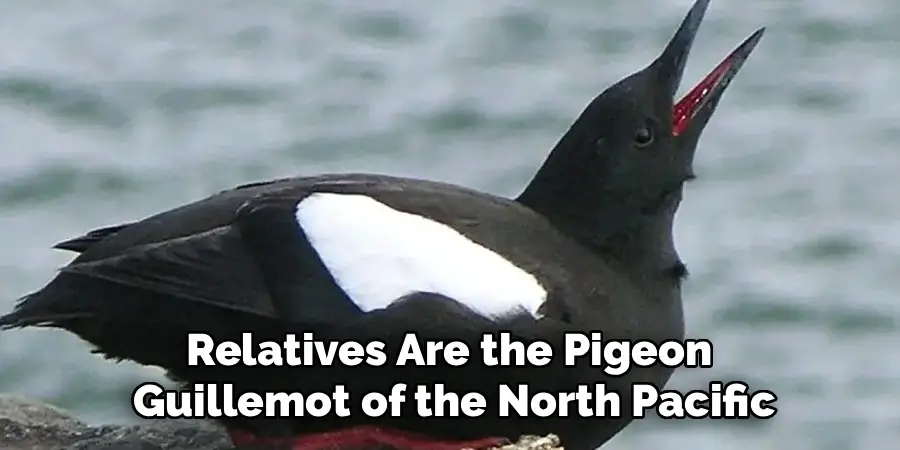
The Spectacled Guillemot, Cepphus carbo, belongs to the auk family. Its nearest relatives are the Pigeon Guillemot of the North Pacific and the Black Guillemot of the North Atlantic. All three share red feet, a bottom-diving lifestyle and a habit of nesting in rock crevices.
The species name carbo means “charcoal” in Latin. That fits the bird’s sooty plumage well, though it says nothing about the feature most people notice first.
The Famous Spectacles
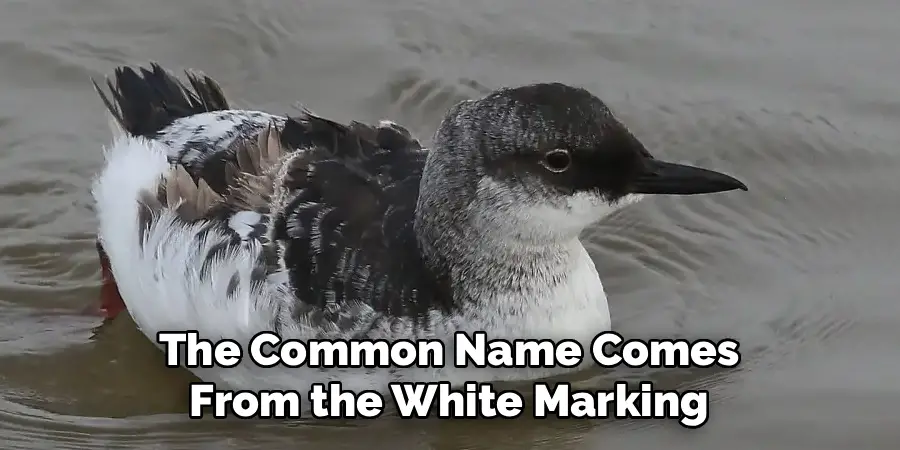
The common name comes from the white marking around each eye. A pale ring encircles the eye, and a slim white stripe often extends backward from it. Many birds also show small white patches at the base of the bill.
Seen up close, the effect is striking. The bird appears to be wearing glasses, which gives it a thoughtful, almost scholarly expression.
Plumage and Missing Wing Patches
Here’s where it parts ways with its cousins. The Pigeon and Black Guillemots both flash bold white wing patches. The Spectacled Guillemot doesn’t, so in breeding season it looks almost entirely black apart from its face and coral-red feet.
Like other guillemots, it also hides a red mouth lining. You’ll only see it when the bird calls or displays.
Size and Build
At roughly 15 inches long, it’s the largest member of its genus. The body is stocky, the wings short and quick. In flight, it skims low over the water with rapid beats, while on land it moves with a careful shuffle.
Where It Lives
The bird’s range is fairly compact. It breeds along the coasts of the Sea of Okhotsk, including Sakhalin, the Kuril Islands and parts of the Russian Far East. In Japan, it’s found mainly around Hokkaido and northern Honshu.
Small numbers may reach the Korean coast in winter. For the most part, though, this is a bird of cold, rocky northern shores that stays fairly close to land year-round.
Behavior That Shapes Its Symbolism
Flying Beneath the Surface
Spectacled Guillemots hunt by diving and using their wings to push through the water. They tend to forage near the seafloor in coastal waters. Small fish such as sand lance make up much of their diet, along with crustaceans and other bottom-dwelling prey.
That habit matters for its symbolism. This bird doesn’t settle for what floats on top. It goes looking below.
Nesting in Cliff Crevices
These birds nest in cracks and cavities on sea cliffs and rocky slopes. A pair usually raises one or two eggs, often laid directly on rock or gravel. Nest sites can be hard to spot even when you know roughly where to look.
Pairs often nest near each other along the same cliff face. Each keeps its own hidden hollow, though, so the colony feels more like a scattered neighborhood than a crowd.
Courtship on the Water
Courtship tends to happen on the sea near the nesting cliffs. Pairs gather, swim close together and call with thin, high whistles. Open-beaked displays show off that bright red mouth.
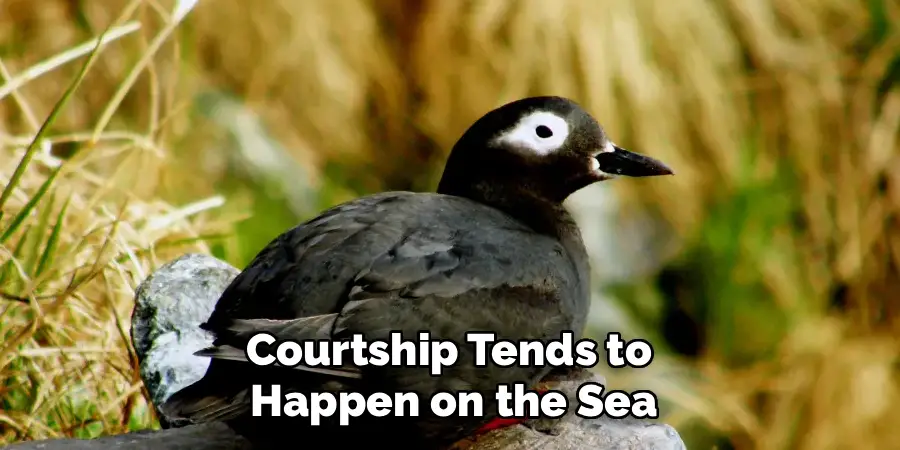
It’s a lively, intimate ritual from a bird that otherwise seems reserved. Watching it feels a bit like overhearing a private conversation.
Changing With the Seasons
After breeding, the plumage shifts. Winter birds become grayer, with paler underparts, and the overall look softens. The spectacle marking usually remains visible, though often less crisp.
That partial change is worth noting. Much about the bird alters, while its signature face stays recognizable.
Spectacled Guillemot Meaning and Symbolism
Hidden Depths
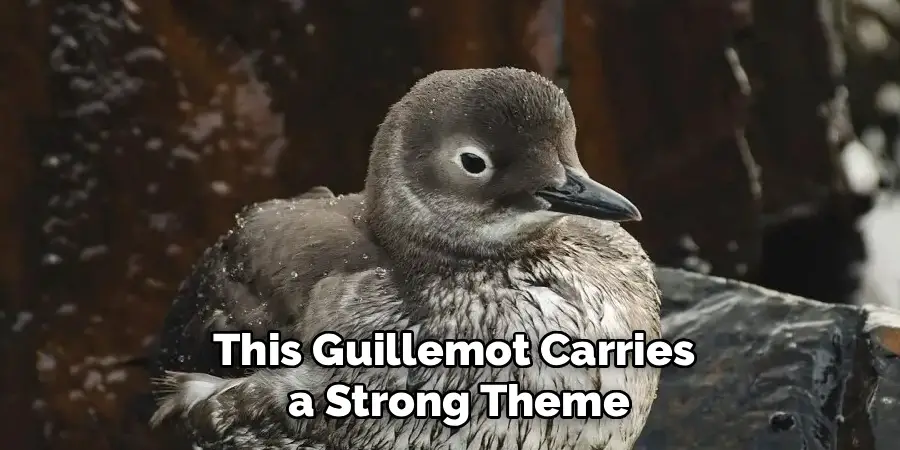
Like its cousins, this guillemot carries a strong theme of depth beneath a plain surface. A small dark bird on gray water conceals a capable diver and flashes of red. Symbolically, that may suggest quiet people often hold far more than they reveal.
It can be read as advice, too. The bird seems to encourage looking past first impressions, including the quick judgments you make about yourself.
Duality Between Rock and Sea
The Spectacled Guillemot nests on cliffs, travels through air and hunts underwater. It never fully belongs to one realm. Many traditions associate water with emotion and land with practical life.
A creature that moves easily between them could represent balance. Feeling deeply and living sensibly needn’t be at odds.
Adaptability in Harsh Places
The Sea of Okhotsk is not a gentle home. Winters bring drift ice, cold winds and rough seas. Yet this bird has made its life there for a very long time.
Its adaptability isn’t flashy. It speaks of steady endurance, the kind that finds a crack in the cliff and makes it work.
Transformation Without Losing Yourself
The seasonal molt carries a natural message about change. You may look and feel different from one chapter of life to the next. Still, the persistent spectacle marking hints that something essential remains intact underneath.
Passion Behind Reserve
Red feet and a red mouth on a sooty bird create a quiet surprise. Red is often linked with warmth and courage, sometimes desire. Hidden on such a composed-looking creature, it may stand for feelings that surface only when the moment calls for it.
Insight and Clear Vision
This is where the Spectacled Guillemot stands apart. Its white eye marking invites an obvious but meaningful reading. Spectacles help people see clearly, so the bird may symbolize insight and perception, or simply the willingness to look closely.
There’s a gentle irony in this. A bird that hunts in murky depths wears the very image of clarity. Perhaps the lesson is that real insight often comes from places where seeing is hardest.
A Distinct Identity
Its lack of a white wing patch also carries weight. The Spectacled Guillemot shares a family resemblance with its cousins yet looks unmistakably like itself. That may speak to people who feel connected to a group while needing to keep their own character.
The Spectacled Guillemot as a Spirit Animal
Who Feels Drawn to It
People who connect with this bird often describe themselves as observant and reflective. Many notice details others miss. Some feel most at home near the sea, while others simply prefer quiet settings where they can think.
Of course, spirit animal bonds are personal. No one needs to match a profile to feel a connection.
What It Seems to Teach
As a guide, the Spectacled Guillemot appears to encourage patient, careful attention. It suggests looking more closely before deciding. It also hints that clarity may require diving into uncomfortable material rather than hovering above it.
Strengths of This Spirit
Those with this spirit animal may be perceptive listeners and thoughtful advisers. Friends might come to them for an honest second opinion. Resilience in difficult conditions could also come naturally.
The Shadow Side
Every symbol has its flip side. Strong guillemot energy may lean toward overanalyzing, peering so closely at a situation that action keeps getting postponed. It could also show up as hiding away in the crevice when connection would help.
Spotting that tendency is useful in itself. Even this careful bird eventually dives.
The Spectacled Guillemot as a Totem Animal
A Note on Totems
The concept of totems originates in specific Indigenous cultures, and modern spiritual use is broader and more personal. With that respect in mind, a totem is often treated as a lifelong symbolic companion rather than a passing messenger.
Traits of a Spectacled Guillemot Totem Person
Someone who adopts this bird as a totem may carry a calm, watchful presence. They tend to value understanding over speed. Close loyalties and a strong sense of self often sit comfortably together in their lives.
Such people may also feel at ease on the margins. Coastal towns, quiet workplaces and small circles of friends can all suit them well.
Living With This Totem
Honoring this totem could mean making space for reflection and careful observation. Time near water helps some people. Others might support seabird conservation or learn more about the fragile ecosystems of the northern Pacific.
What It Means When a Spectacled Guillemot Appears
An Invitation to Look Closer
Seeing one may be read as a nudge to examine something more carefully. Maybe a decision needs more thought, or a relationship deserves more honest attention.
A Reminder of Balance
If you’ve been stuck in pure logic or pure feeling, the bird could point toward a middle ground. Its life between cliff and sea suggests both parts of you need room.
Support During Change
An encounter during a transition may feel especially meaningful. The seasonal molt, paired with that steady eye marking, mirrors the idea that you can change while keeping your clearest sense of self.
Spectacled Guillemots in Dreams
Dreaming of this bird might relate to a wish for clarity about a confusing situation. A guillemot diving into dark water could suggest exploring emotions or memories you’ve avoided. As with most dreams, your own feelings during it probably matter more than any fixed meaning.
A Word of Caution
It’s worth staying grounded here. Around parts of Hokkaido or the Kuril Islands, these birds are seen regularly in season. Spotting one on a boat tour isn’t necessarily a cosmic sign. The meaning lives in what the moment stirs in you.
Cultural and Mythological References
Ainu Connections
The bird’s Japanese name, keimafuri, is often said to derive from the Ainu language. The phrase is commonly interpreted as meaning something like “red feet.” If that origin is accurate, it suggests the Ainu knew the bird well enough to name it by its most vivid feature.
Detailed Ainu stories centered on this guillemot, however, aren’t widely documented in accessible sources. It would be unfair to invent myths and attach them to Ainu tradition.
Peoples of the Russian Far East
Along Sakhalin, the Kurils and the Okhotsk coast, Indigenous peoples such as the Nivkh and Itelmen have long lived alongside seabirds. Birds and their eggs were part of coastal life, and the sea shaped much of these cultures’ worldview. Specific traditions about the Spectacled Guillemot itself, though, remain poorly recorded in English-language sources.
That gap deserves honesty rather than guesswork.
A Modern Symbol of Conservation
In Japan, the Spectacled Guillemot has taken on a newer kind of meaning. Its numbers there appear to have declined over recent decades, and it is listed as threatened on the national Red List. Teuri Island, off Hokkaido’s west coast, has become an important site for monitoring and protecting breeding birds.
Local efforts to study and safeguard the species have made it something of an emblem for coastal conservation. In that sense, the bird with spectacles now asks people to look more closely at the health of their own shores.
Conclusion
The Spectacled Guillemot is easy to miss. It’s dark and compact, and it lives along cold coasts that relatively few travelers visit. Yet beneath its reserved surface sits a strong diver with red feet, a whistling voice and that unforgettable pale ring around each eye.
Exploring the Spectacled Guillemot Meaning, Symbolism and Totem traditions reveals themes of hidden depth and steady resilience, along with a particular emphasis on insight. As a spirit animal or totem, it seems to support people who observe carefully and see clearly, even when the water is murky.
If you ever find yourself on a boat off Hokkaido or the Russian Far East, keep watching the cliffs. When a black bird turns its head and shows you those white spectacles, you may feel, just for a moment, that it’s studying you right back.
