

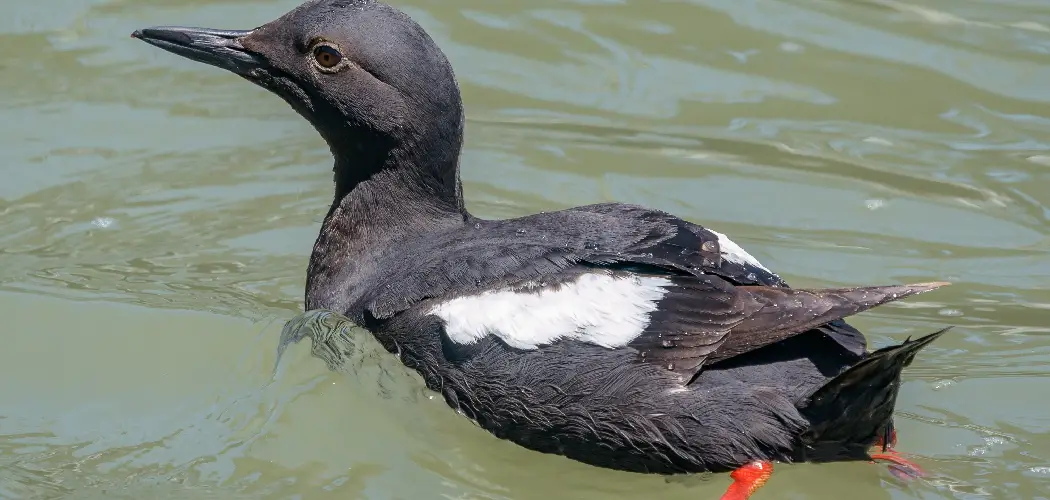
The first time I noticed one, I almost missed it. A small black bird bobbed beside a ferry dock in the Salish Sea, so dark it looked like a scrap of wet charcoal on the water. Then it turned, flashed a bright white wing patch, and dove. As it went under, I caught a glimpse of feet so red they looked painted.
That quick reveal stuck with me. Here was a bird that seemed plain until it suddenly wasn’t.
The Pigeon Guillemot carries that same quality into its symbolism. People drawn to this seabird often talk about hidden depths and quiet adaptability. They also mention a life lived comfortably between two worlds. This article covers pigeon guillemot meaning, what the bird looks like and where it lives. It then explores its spiritual meaning, its role as a spirit animal and totem, and what it might mean when one crosses your path.
Getting to Know the Pigeon Guillemot
A Seabird With a Misleading Name
Despite the name, this bird has nothing to do with pigeons. It belongs to the auk family, Alcidae, alongside puffins, murres, and murrelets. Its scientific name, Cepphus columba, nods to a supposed resemblance to doves, mostly in its compact shape and rounded head.
The word “guillemot” comes from French and is often traced to the name Guillaume, or William. It’s a slightly odd, very human label for a bird that spends most of its life far from people’s attention.
What It Looks Like
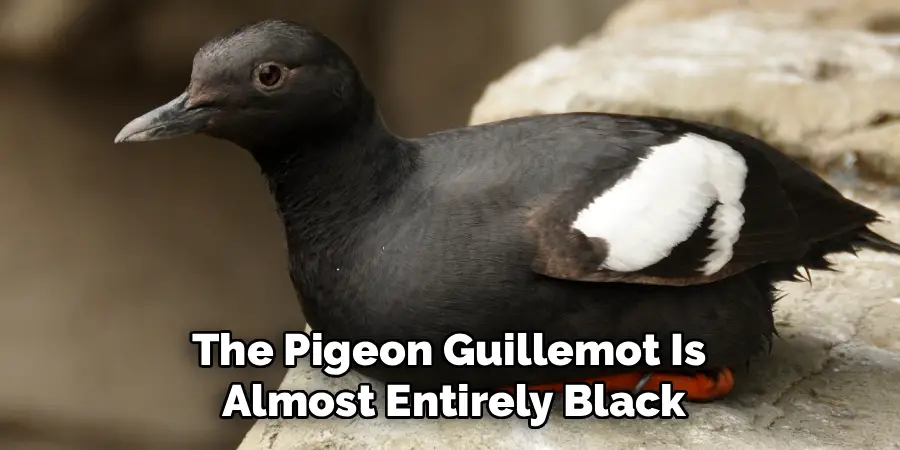
In breeding season, the Pigeon Guillemot is almost entirely black. A large white patch on each wing breaks up the darkness, usually crossed by a black wedge or bar. Its legs and feet are a striking coral red, and the inside of its mouth matches.
Winter changes everything. The bird molts into a mottled gray and white plumage, so pale that some people assume it’s a different species. Only the wing patch stays reliably familiar.
Size and Build
It’s a modest bird, roughly 13 inches long. The body is stocky, built more for swimming than graceful flight. On land, it shuffles. Underwater, it moves with real speed and control.
Where It Lives
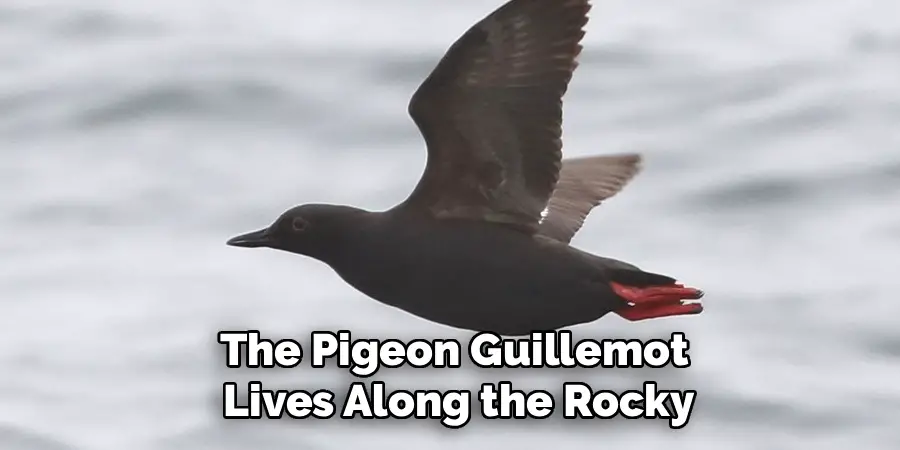
The Pigeon Guillemot lives along the rocky coasts of the North Pacific. Its range stretches from California up through Oregon, Washington, and British Columbia into Alaska and the Aleutian Islands. Across the Pacific, it reaches the Kamchatka Peninsula and the Kuril Islands.
It tends to stay close to shore, unlike many seabirds that roam the open ocean. You’re more likely to see one near a harbor or a ferry terminal than far out at sea.
Behavior That Shapes Its Symbolism
A Bird That Flies Underwater
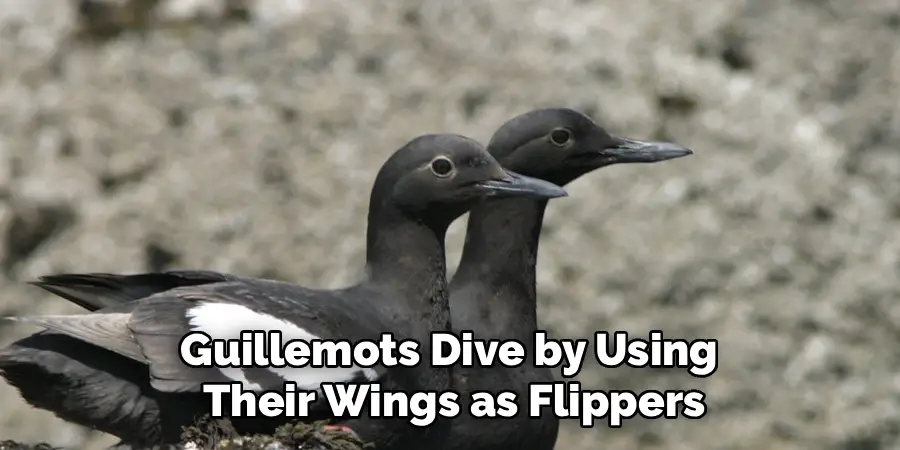
Guillemots dive by using their wings as flippers. They push themselves toward the seafloor, where they hunt fish such as sculpins and gunnels, along with crabs and other small prey. Most of their food comes from near the bottom rather than the surface.
That habit matters symbolically. This is a bird that doesn’t skim the top of things. It goes down to find what it needs.
Nesting in Hidden Places
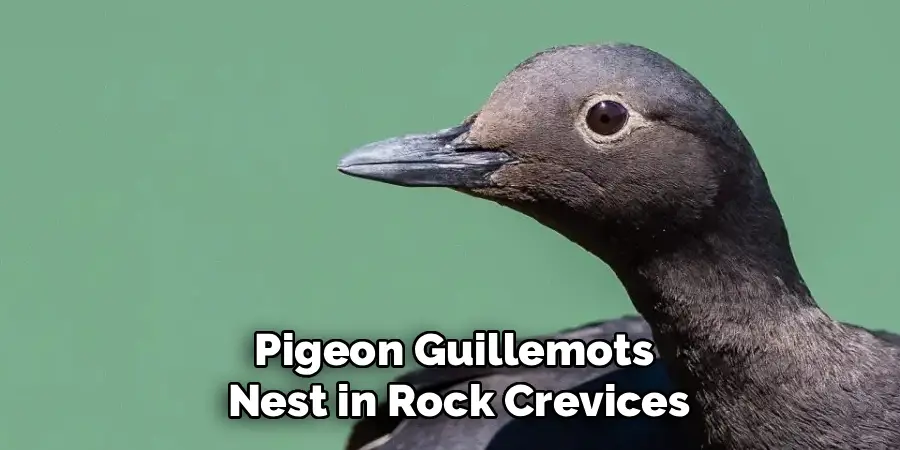
Pigeon Guillemots nest in rock crevices, cliff burrows, and small caves. They’ve also adapted to human structures, tucking nests under piers, inside old pilings, and beneath docks. A female usually lays one or two eggs.
Nest sites are often loosely grouped rather than packed tightly together. The birds share a stretch of shoreline while keeping their own small, private spaces.
Whistles and Red Mouths
Their calls are surprisingly high and thin, more like whistles than squawks. During courtship, birds often face each other, whistle, and open their beaks to show that vivid red lining. Pairs may also swim in circles together or chase each other underwater.
It’s a lively display from a bird that seems so understated at first glance.
Pigeon Guillemot Meaning and Symbolism
Hidden Depths
The most common theme tied to this bird is depth beneath a simple surface. A dark shape on the water hides a capable diver and a flash of brilliant color. Symbolically, that may suggest that a person’s quieter qualities deserve more credit than they usually get.
It can also point inward. Some people read the guillemot as a nudge to look below their own surface reactions and ask what’s really going on underneath.
The Duality of Land and Sea
Few creatures straddle environments as neatly as seabirds do. The guillemot nests on rock, flies through air, and hunts underwater. It belongs fully to none of those places, and yet seems at ease in each.
Many spiritual traditions treat water as a symbol of emotion and the unconscious, while land often represents practical, everyday life. A bird that moves easily between them could stand for balance between feeling and doing.
Adaptability Without Fuss
The way these birds nest under busy docks says a lot. They don’t demand pristine wilderness. They work with what’s available, even if it’s a creosote-soaked piling beside a parking lot.
That gives the guillemot a grounded kind of adaptability. It isn’t about dramatic reinvention. It’s about making a reasonable home wherever life happens to put you.
Community With Boundaries
Guillemots gather loosely, often sharing the same rocky shoreline or pier. Still, each pair keeps its own crevice. That pattern may speak to people who value connection but also need personal space.
There’s a quiet lesson in it. Belonging to a group doesn’t have to mean giving up privacy.
Transformation Across Seasons
The shift from glossy black to pale mottled gray is dramatic. Symbolically, it can represent seasons of change in a person’s life. You may look and feel different from one chapter to the next and still be the same being underneath.
The unchanging white wing patch adds a nice detail here. Something essential stays constant even through visible change.
Passion Beneath Reserve
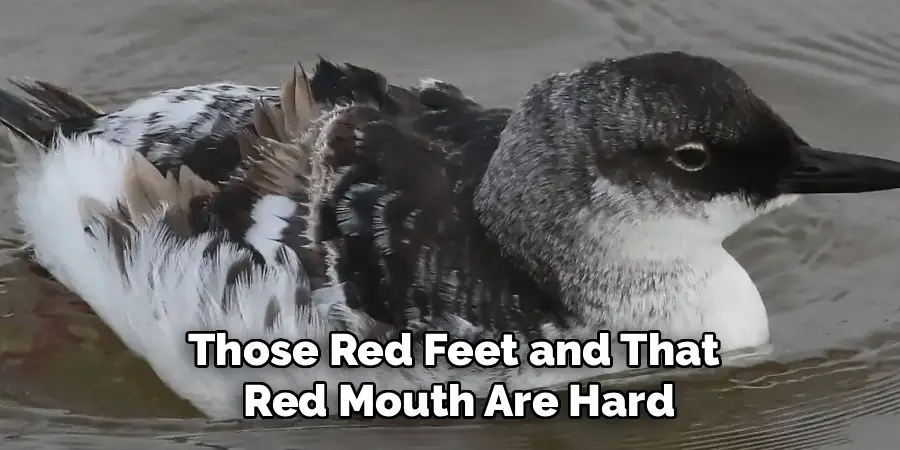
Those red feet and that red mouth are hard to ignore once you’ve seen them. Red tends to be associated with energy and desire, sometimes with courage. On a mostly black bird, it suggests warmth hidden behind a reserved exterior.
People who seem calm or private on the outside may relate to this strongly.
The Pigeon Guillemot as a Spirit Animal
Who Tends to Feel Drawn to It
People who connect with this bird as a spirit animal often describe themselves as observant and somewhat private. They may prefer depth over breadth in friendships. Many feel most themselves near water, or simply in quiet, slightly overlooked places.
That said, spirit animal connections are personal. There’s no checklist that qualifies someone.
What It May Teach
As a guide, the guillemot seems to encourage patient exploration. It suggests diving into a problem rather than circling it endlessly. It also hints that you can be both practical and emotionally aware without choosing one side.
There’s a gentleness to its message, too. It doesn’t push for big, loud change. It simply keeps showing up, diving, surfacing, and diving again.
Strengths of the Guillemot Spirit
People with this spirit animal may be resourceful in modest ways. They often make do, fix things, and find comfort in imperfect settings. Loyalty may come naturally, echoing the paired courtship behavior of the birds.
Possible Shadow Side
Every symbol has a flip side. A strong guillemot energy might lean toward hiding too much, staying tucked in the crevice when it would be healthier to come out. Someone might also undervalue themselves, assuming others only see the plain black surface.
Noticing that tendency is half the work. The bird, after all, still flashes its red when it matters.
The Pigeon Guillemot as a Totem Animal
Understanding Totem Energy
In modern spiritual practice, a totem animal is often seen as a lifelong companion symbol rather than a passing messenger. It’s worth noting that the original concept of totems comes from specific Indigenous cultures, and contemporary use tends to be looser and more personal.
With that in mind, the guillemot as a personal totem usually represents steady, grounded traits that persist over many years.
Traits of a Guillemot Totem Person
People who adopt this bird as a totem may feel at home on the edges of things. Coastlines, small towns, and the margins of social groups can all feel natural. They tend to adapt quietly and keep a small circle close.
Many also carry a creative or passionate streak that few people see at first. Like the bird, they reveal it in the right moment.
Living With This Totem
Honoring a guillemot totem might mean spending time near the ocean, even occasionally. It could also mean protecting time for reflection, or supporting coastal habitats. Some people find simple meaning in watching for these birds on trips to the Pacific coast.
What It Means When a Pigeon Guillemot Appears
A Call to Look Deeper
Seeing one could be read as an invitation to go beneath the surface of a situation. Maybe a relationship, a job, or a decision deserves more honest attention than you’ve been giving it.
A Reminder of Balance
If you’ve been living entirely in your head or entirely in your feelings, the guillemot may point toward balance. Its life between rock and water suggests that both sides of you need room.
Encouragement During Change
An encounter during a period of transition can feel meaningful. The bird’s seasonal molt mirrors the idea that change doesn’t erase who you are. It just alters how you appear for a while.
Dreams of Guillemots
Dreaming of a diving seabird may relate to exploring emotions or memories you’ve kept submerged. A guillemot nesting in a hidden crevice could suggest a need for safety or retreat. As always, the dreamer’s own feelings in the dream probably matter more than any fixed interpretation.
Keeping Interpretation Grounded
It’s worth staying honest here. In much of its range, this is a fairly common coastal bird. Seeing one near a marina isn’t necessarily a cosmic message. The meaning comes from what the encounter stirs in you, not from rarity.
Cultural and Mythological References
Coastal Indigenous Traditions
The Pigeon Guillemot’s range overlaps with the homelands of many Indigenous peoples, including the Unangan (Aleut), Tlingit, Haida, and Coast Salish nations. Seabirds were part of daily life in these coastal communities, as food sources, as signs of seasonal patterns, and as figures in broader stories about the sea.
Specific myths centered on the Pigeon Guillemot itself are not widely documented in accessible sources. It would be unfair to invent symbolism and attribute it to any particular nation. Respectful interest means acknowledging that gap.
Seabirds in Northwest Coast Storytelling
More broadly, Northwest Coast traditions are rich with bird figures, Raven being the most famous. Seabirds often appear in stories connected to the ocean’s abundance and the relationships between humans and the natural world. The guillemot belongs to that wider world of sea creatures, even if it rarely takes center stage.
A Modern Symbol of Coastal Health
In recent decades, the bird has gained a different kind of cultural role. Community science programs in the Salish Sea region have tracked Pigeon Guillemot nesting for years. Because these birds feed close to shore, their numbers may offer clues about the health of nearshore ecosystems.
That gives the guillemot a modern symbolic weight. It has become a quiet indicator of how well people are caring for the coast.
Conclusion
The Pigeon Guillemot is easy to overlook. It’s small and dark, and it often bobs beside a dock where few people bother to watch. Yet beneath that plain surface sits a skilled diver with bright red feet, a whistling voice, and a life comfortably split between rock, air, and sea.
Symbolically, the Pigeon Guillemot speaks to hidden depths and grounded adaptability. It points to community with healthy boundaries and to balance between emotion and practicality. As a spirit animal or totem, it seems to support people who are quieter on the outside and richer underneath.
If you ever find yourself near a rocky Pacific shoreline, take a moment to scan the water. When a black shape suddenly flashes white and red and slips under the surface, you’ll understand why this bird leaves such a lasting impression. Thanks for reading about the pigeon guillemot meaning.
