

The forest was so dark I could barely see my own boots. Moss swallowed every footstep, and the air smelled of cedar, rain and salt. Somewhere below, waves broke softly against the rocks of a small island off Haida Gwaii.
Then came the sound. It was a faint scrabbling in the leaf litter, followed by a thin, high peep. A ball of black-and-white fluff, no bigger than a plum, tumbled past my feet and kept running downhill toward the water.
It was a two-day-old Ancient Murrelet chick, heading to sea in total darkness. Out on the water, its parents were calling for it. I’ve thought about that tiny bird almost every week since.
This article explores the Ancient Murrelet Meaning, Symbolism and Totem traditions linked to a small seabird with an extraordinary life story. It begins with the bird itself, then turns to its spiritual meanings, its role as a spirit animal and totem, what an encounter might signify, and the cultural threads around it.
Getting to Know the Ancient Murrelet
A Small Member of the Auk Family
The Ancient Murrelet, Synthliboramphus antiquus, belongs to the auk family, Alcidae. That places it alongside puffins, murres and guillemots. Within that family, it sits in a small group of murrelets known for raising their young almost entirely at sea.
The scientific name antiquus simply means “ancient” or “old.” It’s a strange label for a bird that weighs about as much as a tennis ball.
Why It’s Called “Ancient”
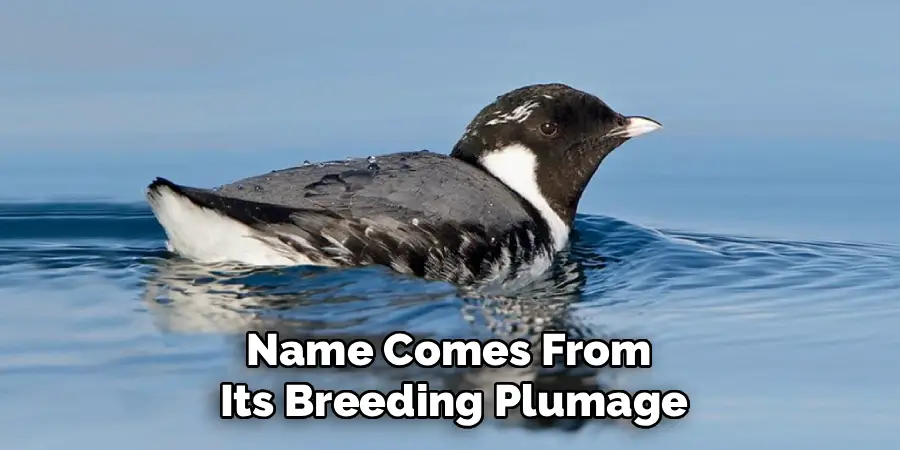
The name comes from its breeding plumage. Fine white streaks run along the sides of its black head, like wisps of gray hair. Combined with a soft gray back, the effect reminded early naturalists of an elderly person wearing a shawl.
It’s a fond, slightly comic image. Once you’ve seen the bird, it’s hard to forget.
Appearance Up Close
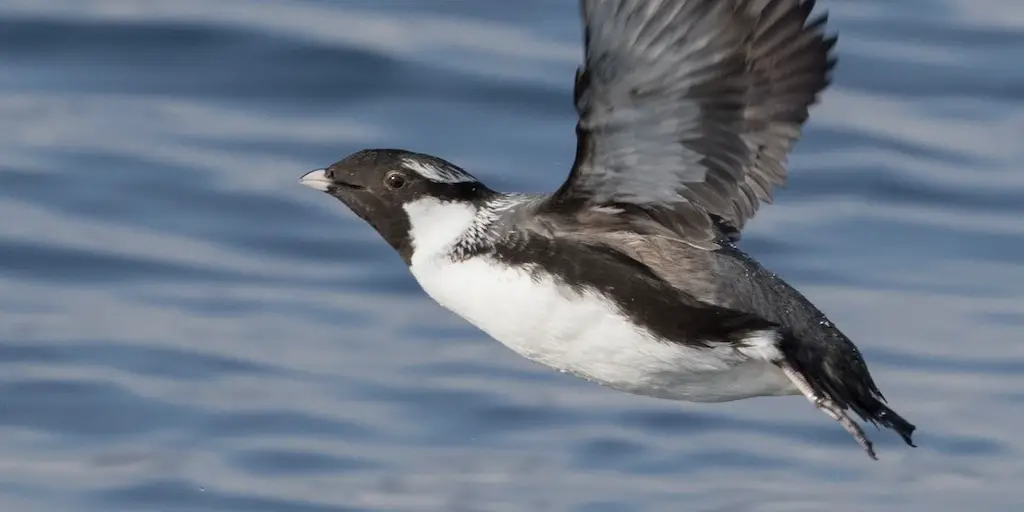
The head and throat are black, the underparts bright white, and the back a clean slate gray. A short, pale bill stands out against the dark face. In winter, the white head streaks fade and the plumage turns plainer.
Size and Build
This is a compact seabird, roughly 10 inches long. Its wings are short and fast-beating. In flight, it often travels low over the water in small, tight groups.
Where It Lives
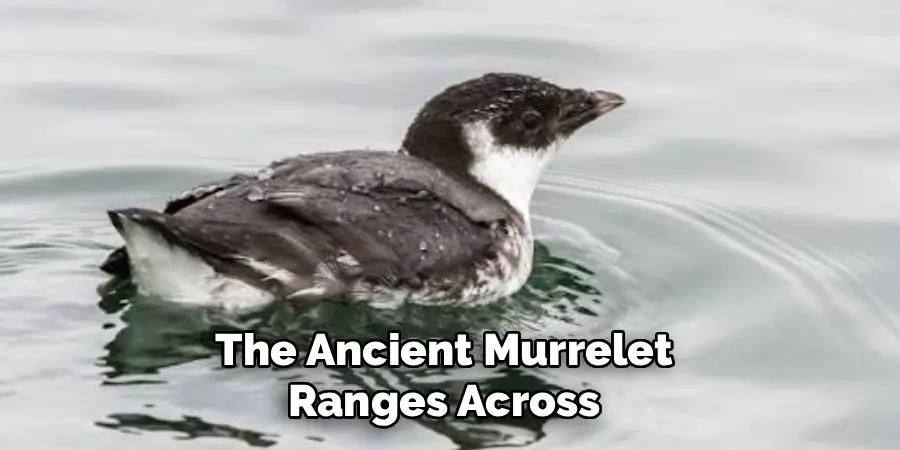
The Ancient Murrelet ranges across the North Pacific. It breeds from British Columbia and Alaska through the Aleutian and Commander Islands, then down through the Kurils and Sakhalin toward Korea and China. Haida Gwaii, off the coast of British Columbia, is thought to hold roughly half the world’s breeding population.
Outside the breeding season, most birds disperse offshore. Storms occasionally push stray individuals far inland, sometimes to lakes hundreds of miles from the ocean.
Behavior That Shapes Its Symbolism
A Creature of the Night
At their colonies, Ancient Murrelets come and go almost entirely after dark. Gulls, ravens, eagles and falcons patrol many nesting islands by day. Arriving under cover of night appears to be the bird’s main defense.
That nocturnal habit colors much of its symbolism. This is a bird that does its most important work when no one is watching.
Burrows Beneath the Forest
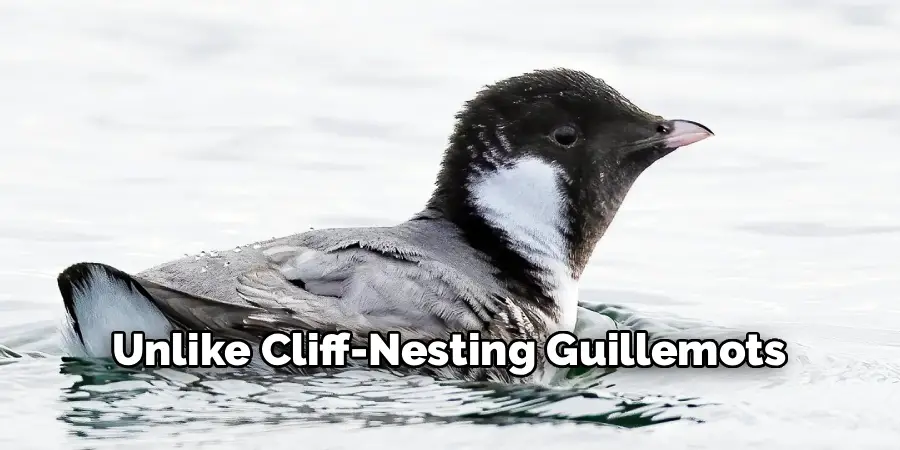
Unlike cliff-nesting guillemots, Ancient Murrelets dig burrows into soft soil. Many sit under the mossy roots of old spruce and cedar trees. Others are tucked beneath fallen logs or grassy slopes.
A female usually lays two eggs. Parents take turns incubating, often in shifts lasting several days, while the other partner feeds at sea.
Diving for a Living
These birds hunt by diving and swimming underwater with their wings. They feed largely on krill and other small crustaceans, along with small fish such as sand lance. Much of this foraging happens over open water, sometimes well away from shore.
The Remarkable Chick Departure
This is where the Ancient Murrelet becomes genuinely astonishing. Chicks are never fed in the burrow. Usually within one to three days of hatching, they leave the nest on a single dark night.
They scramble downhill through the forest, over roots and rocks, sometimes falling or rolling. At the shoreline, parents wait on the water, calling. Chicks appear to recognize their own parents’ voices, and families find each other in the dark.
Then they simply swim away. The young are raised at sea, far from land, for weeks to come.
Ancient Murrelet Meaning and Symbolism
Ancient Wisdom
The name alone invites a symbolic reading. A bird marked with “gray hair” from youth suggests wisdom that isn’t tied to age. Some people read it as a reminder that insight can arrive early, or that old knowledge lives inside us before we fully understand it.
There’s also something ancestral in its behavior. Chicks carry the instinct to find the sea without ever being shown the way.
Courage
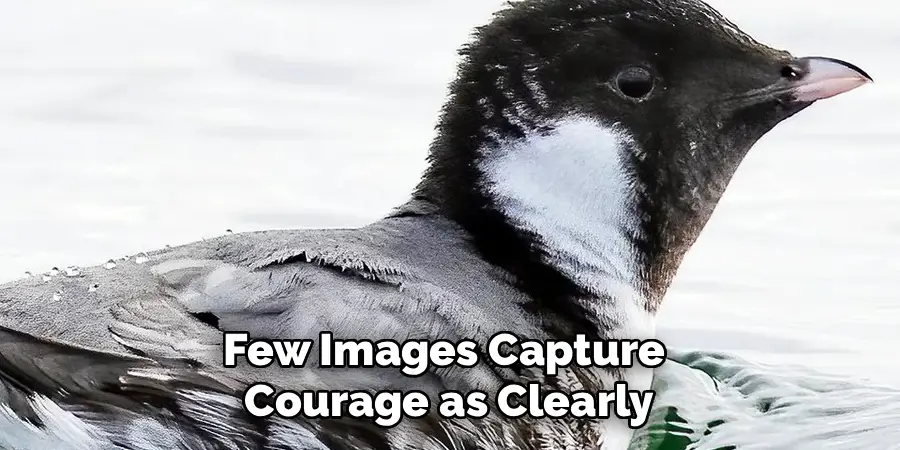
Few images capture courage as clearly as a two-day-old chick running toward the ocean at night. It can’t fly. It has never eaten. Still, it goes.
Symbolically, that may speak to anyone facing a leap they don’t feel ready for. Readiness, the bird seems to suggest, is often overrated.
Trust
The chick’s journey depends on trust. It follows a voice through darkness, and the parents trust their young to make it down the slope. Neither can fully control the outcome.
That makes the Ancient Murrelet a natural symbol of faith in relationships. It may also represent trust in your own instincts when the path isn’t visible.
Duality of Ocean and Land
This bird lives two very different lives. It nests in dim, mossy forests and spends most of its existence on the open ocean. Many traditions link land with rootedness and the sea with emotion and the unknown.
A creature at home in both could stand for balance. It hints that you can keep roots while still venturing into wide, uncertain waters.
Transformation
The chick’s descent is a vivid picture of transformation. It leaves the only home it has known after mere days and enters an entirely different world. There’s no gradual transition.
Some people relate this to abrupt life changes, such as a move, a loss, or a sudden new role. The bird suggests that sharp transitions can still lead somewhere sustaining.
The Ancient Murrelet as a Spirit Animal
Who Feels Drawn to It
People who connect with this bird often describe themselves as quiet and private but surprisingly brave when it counts. Many do their best thinking late at night. Others simply feel moved by stories of small creatures doing hard things.
Spirit animal connections are personal, though. Nobody needs to fit a profile.
What It May Teach
As a guide, the Ancient Murrelet seems to encourage acting before every question is answered. It also highlights listening, especially for the voices that matter most. Under all that sits a gentle message about family and belonging.
Strengths of This Spirit
Those with murrelet energy may be dependable partners and steady parents or friends. They tend to share responsibilities fairly, much as the birds trade incubation shifts. Resilience under pressure may also come naturally.
The Shadow Side
Every symbol has a flip side. Strong murrelet energy might lean toward hiding, doing everything in the dark so no one sees the effort. That can leave people feeling overlooked.
It could also show up as rushing into change too quickly. The chick has good reasons to run. Not every situation calls for the same urgency.
The Ancient Murrelet as a Totem Animal
A Note on Totems
The concept of totems comes from specific Indigenous cultures, and modern spiritual use is looser and more personal. With that respect in mind, a totem is usually seen as a lifelong symbolic companion rather than a passing messenger.
Traits of a Murrelet Totem Person
Someone who holds this bird as a totem may feel deeply tied to family, whether by blood or by choice. They often carry quiet courage and an instinct for timing. Many seem comfortable living between worlds, perhaps between cultures, careers or places.
How to Honor This Totem
Honoring the Ancient Murrelet might mean protecting quiet time at night for reflection. It could involve supporting seabird conservation or island restoration projects. Even turning off unnecessary outdoor lights near coasts can help, since artificial light may disorient night-flying seabirds.
What It Means When an Ancient Murrelet Appears
A Nudge Toward Courage
Seeing one may be read as encouragement to take a leap you’ve been postponing. The bird’s story suggests that small, uncertain beginnings can still carry you to open water.
A Call to Listen
An encounter could also point toward listening more carefully. Who is calling you forward right now? Whose voice do you trust in the dark?
Ancient Murrelets in Dreams
Dreaming of this bird may relate to a looming transition or a fear of leaving somewhere safe. A chick running downhill could suggest you’re already in motion, even if it feels chaotic. As always, your own emotions in the dream probably matter more than any fixed meaning.
A Caution Against Over-Interpreting
It’s worth staying grounded here. In parts of coastal British Columbia and Alaska, these birds are seen fairly regularly offshore. Spotting a flock from a ferry isn’t necessarily a cosmic message. The meaning lies in what the moment stirs in you.
Cultural and Mythological References
Pacific Indigenous Peoples
The Ancient Murrelet’s largest colonies sit within the homelands of the Haida Nation. Seabirds have long been part of coastal life across the North Pacific, including among the Haida, Tlingit, Unangan (Aleut) and peoples of the Russian Far East. Birds, eggs and seasonal patterns were woven into food, travel and knowledge of the sea.
Specific myths about the Ancient Murrelet itself, however, aren’t widely documented in accessible sources. It would be disrespectful to invent stories and attach them to any nation.
Shared Stewardship on Haida Gwaii
What is well documented is more recent. In Gwaii Haanas, co-managed by the Haida Nation and the Government of Canada, protecting seabird colonies has become part of a broader commitment to the land and sea. That partnership gives the murrelet a contemporary cultural role tied to stewardship.
A Modern Symbol of Conservation
Introduced rats and raccoons devastated several Ancient Murrelet colonies on Haida Gwaii in the twentieth century. Rats could easily raid burrows, and colonies on some islands collapsed. Starting in the 1990s, eradication projects removed rats from islands such as Langara, and some murrelets have begun returning.
Volunteers with the Laskeek Bay Conservation Society have monitored murrelets on East Limestone Island for decades. Watching chicks race to the sea at night has become a small, cherished ritual for those observers. In Canada, the species is listed as one of Special Concern, which gives that watching added weight.
Conclusion
The Ancient Murrelet is easy to miss. It’s small, it comes and goes at night, and it raises its young far from human eyes. Yet its life holds one of the most moving stories in the bird world, a newborn chick running through a dark forest toward a parent’s voice.
Exploring the Ancient Murrelet Meaning, Symbolism and Totem traditions reveals themes of early wisdom and quiet courage. Trust runs through all of it, along with a life split between root and wave. As a spirit animal or totem, it seems to support people facing sudden change with steady hearts.
If you ever find yourself on a northern Pacific coast on a still spring night, stop and listen. Somewhere in the moss, something very small may be finding its way to the sea.
