

Have you ever considered the amazing spiritual meaning behind one of history’s most valued domestic animals, the cow? Cattle have served as a source of food, wealth, and labor for centuries, and they even hold a special place in many religious texts.
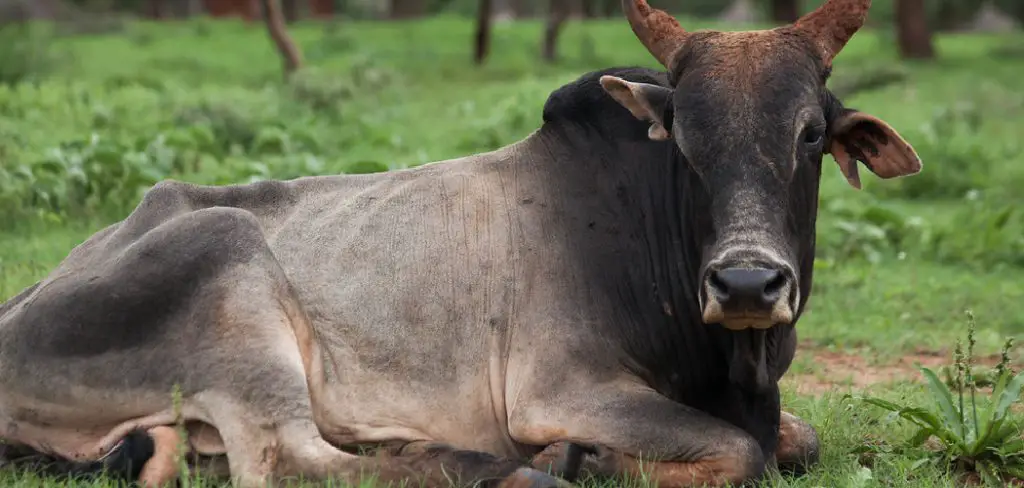
From ancient Babylonian mythology to Hinduism – where cows are venerated as sacred beings – these gentle creatures seem to carry great divine symbolism with them wherever they go.
Here we explore cattle spiritual meaning and why it’s so important for us to honor their contribution. So grab yourself a hot cup of java and join us on this fascinating journey through time into the remarkable realm of cattle spirituality!
Cattle Symbolism and Meaning
Cattle Native American Symbolism
Cattle are an important part of Native American symbolism. Spirits, stories, and rituals around these animals illustrate their deep significance to many indigenous communities. Likewise, the long history of the bison and other traditionally hunted species within North America are best used to symbolize many spiritual practices of the First Nations tribes.
Cattle also carry shared connections between humans and the divine and natural settings that impart knowledge from ancient ancestors. Through adopting ceremonies to include cows in place of traditional game species, many tribes were able to form vital relationships with their cultural symbols for generations of spiritual learning.
Cattle Eastern Symbolism
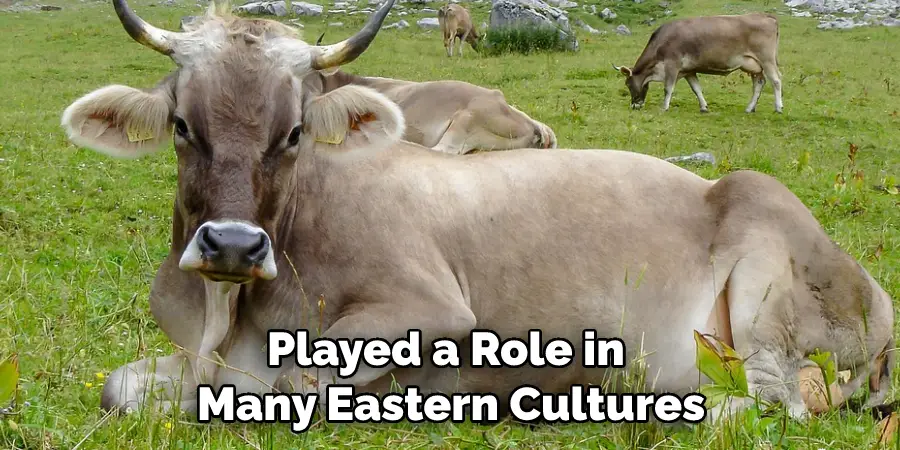
Cattle have long played a role in many Eastern cultures, often as symbols of wealth and power. In ancient Egypt, cows played an important part in religious rituals, while in Hinduism, they are seen as the embodiment of motherhood.
Chinese folk tales speak of Oxen being used as symbols of strength and resilience throughout the ages, while in contemporary Japan, cows are seen as signs of good luck- which is why some businesses pay to keep one on their premises!
In India, cows are still highly revered for their milk and contribution to agriculture; thus, it’s clear that cattle will continue to play an important symbolic role in Eastern culture for centuries to come.
Cattle Christianity Symbolism
The symbolism of cattle in Christianity has its roots in ancient mythology. Cattle are often seen as symbols of sacrifice, strength, and abundance due to their power and size in combination with the plentiful resources they provide.
In the Old Testament, cattle symbolized the divine favor bestowed upon Job while his family and his estate were restored after enduring severe hardship. Jesus himself even likened himself to a gentle shepherd watching over his flock of sheep and cows to reward, protect, or punish depending on their actions.
Additionally, during the Last Supper, when giving blessings, Jesus used images of a lamb and a goat being offered as sacrifices on the Passover evening to show how important it is for believers to offer up something valuable they possess in devotion to God.
This symbolic importance has found its way into Christian art from medieval Europe all the way up to modern-day depictions of Jesus on a cross with two cattle underneath him, signifying unwavering loyalty and commitment through any personal trials faced.
Cattle Celtic Symbolism
Cattle have been a symbol of wealth, hospitality, and bounty in many cultures throughout history. In Celtic culture, cattle are deeply symbolic with their connection to the ancient deities and goddesses that populated the Pagan belief systems for centuries until becoming part of Gaelic Christianity beginning in the 5th century AD.
Cattle were an important source of food, labor, material goods, and spiritual offerings in these cultures. As a result, the cow was regularly adorned with signs of Celtic symbols on trappings, such as collar necklaces denoting fertility and protection from harm.
As they plowed sacred fields while tethered behind war horses, their physical strength became symbolically intertwined with larger topics such as loyalty, friendship, and courage, making them central figures in Celtic symbolism today.
Cattle African Symbolism
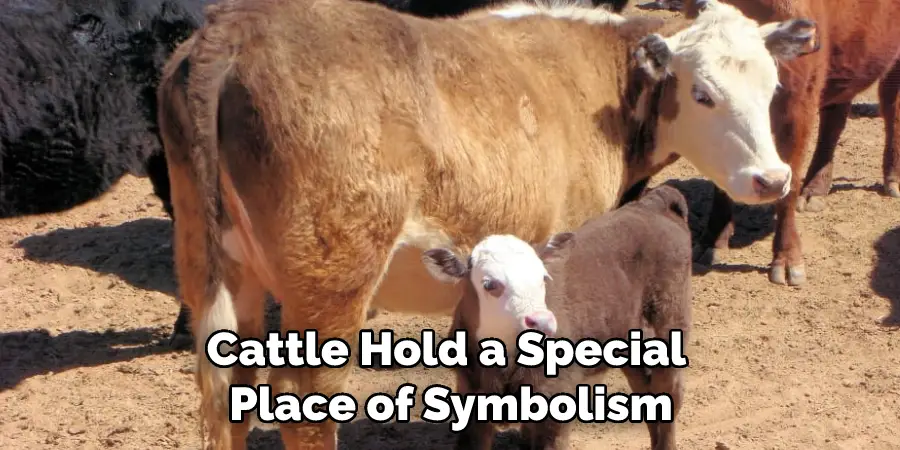
In some African cultures, cattle hold a special place of symbolism and reverence. Believed to be a divine blessing of abundance and good fortune, symbols related to the cow are often used to invoke luck and prosperity. As a result, it is not uncommon for these symbols to appear in artistry like pottery, sculpture, and carvings – across tribes, regions, and cultures.
In addition to cultural symbolism, cattle have served as an important part of the economy for centuries: providing humans with food, materials for clothing and tools, trade items, draft power – even fuel via dung! This extraordinary animal is truly a symbol of importance in many African cultures.
Cattle Spiritual Meaning
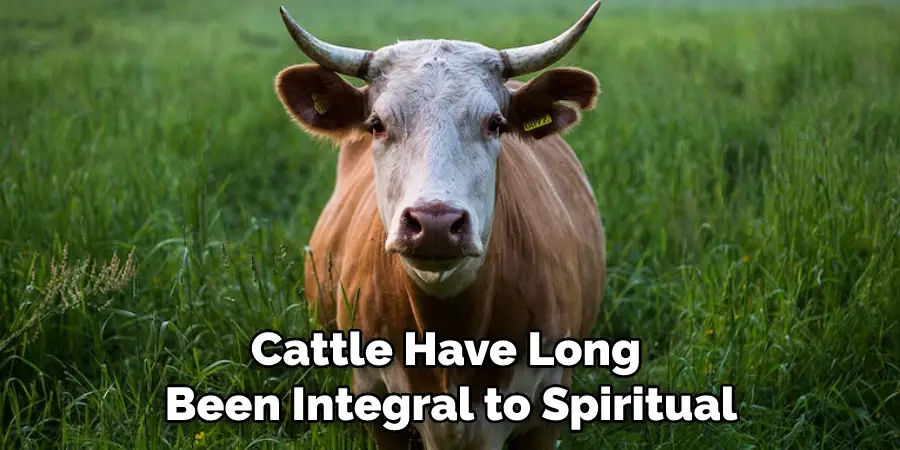
Cattle have long held spiritual meaning and significance for many cultures worldwide. Historically, cows and bulls have been seen as symbols of strength, fortitude, fertility, and abundance. In Hinduism, for instance, a cow symbolizes divine beneficence; Hindus regard cattle as “sacred creatures” that should be respected and honored.
Similarly, in Buddhism and Jainism, cattle are praised for their importance in producing food and providing companionship throughout human lives. In Africa, some tribes view cows as symbols of wealth representing authority, power, prestige, and fertility.
The cattle symbolism even stretches to Christianity, representing hard work and the understanding of animals within Christian beliefs. Cattle can have many connotations depending on the cultural context, but across most cultures, their spiritual meanings are largely united by principles such as success, generosity, and respect.
Cattle in Dreams
Dreams can often be mysterious and hard to interpret, but one possible interpretation of dream symbols relates to experiences from our waking life. For example, in some cases, dreaming about cattle may represent ideas such as creativity, contentment, stability, and fertility.
Cattle are generally viewed as creatures that bring about strong feelings of nourishment for both body and soul. Additionally, in certain Native American cultures, cattle are seen as a symbol of strength and perseverance.
Those who dream about cattle may look for the same kind of security and contentment that the animals provide in real life. By understanding cultural symbolism related to cattle in dreams, we can start to unpick what our dreams truly mean.
Cattle Encounters and Omens
For many cultures, cattle have long been integral to spiritual and supernatural beliefs. Tribal practices and rituals often involve encounters with cattle – either live or as a sacrificed offering – which are believed to help individuals and families explore their spiritual journeys. Cattle-based omens are also important features in several societies.
Omens such as the color of a cow’s eyes were the basis for decision-making and actions in many traditional cultures. Additionally, the birth of certain colored calves was considered symbolic of either good luck or a warning of forthcoming danger.
Early contact between tribes brought about the sharing of cultural practices regarding cattle, allowing us today to watch these sacred beliefs being passed from one generation to the next.
Cattle’s Meaning in Mythology and Folklore
In mythology and folklore, cattle have often been ascribed a special or sacred meaning. For example, ancient Greeks viewed cattle as a symbol of wealth, power, and prosperity, while in Navajo folklore, cows are seen as powerful home protectors.
In Hindu tradition, the cow symbolizes sustenance and nurturing energy. Hindus believe that all living things owe their existence to the Mother Goddess’s gift of the divine cow. Similarly, in Norse Mythology, cows are associated with the goddess Freya whose duties include sustainable agriculture and agriculture-based rituals.
Thus, across cultures, the meanings attributed to cattle vary wildly while constantly hinting at its protective nature and ability to give life and sustenance to humans.
Cattle Totem Animal
Cattle are an important totem animal with a long history of being associated with traditional cultures. They represent generosity and compassion, which can be seen in how they provide pastoral care to the other animals on the land. It is believed that those with this totem will enjoy a life of abundance, protection, and success.
Cattle are also seen as guardians of prosperity – they literally till the earth to nourish it and help sustain life. In many cultures worldwide, cattle have been seen as a symbol of fertility and nurturing, bringing abundance in their wake.
Because cattle are communal creatures, their presence often brings people together to share wisdom and knowledge through stories and songs. This connection with cycles of time has made them a much-revered emblem of stability that many seek out for guidance on their paths.
Cattle Tattoo Meaning
Cattle are often given tattoos for many reasons. These tattoos range from identification numbers to symbols representing a procedure the animal has gone through.
There is even a practice of “tattooing with meaning.” This is when farmers give their cattle tattoos with religious or personal symbolism, allowing them to identify with their animals and recognize their unique qualities personally.
It’s a special way for farmers to show how much they care about their livestock and ensure each animal is regularly cared for and accounted for. Tattooing is becoming more commonplace, so if you plan on working with or around livestock, it’s important to know the meanings behind different types of cattle tattooing.
Cattle Spirit Animal
The cattle spirit animal carries several important meanings. For one, they are associated with domesticity and stability due to their largely docile natures. They also convey a sense of self-sufficiency and a willingness to help others in need.
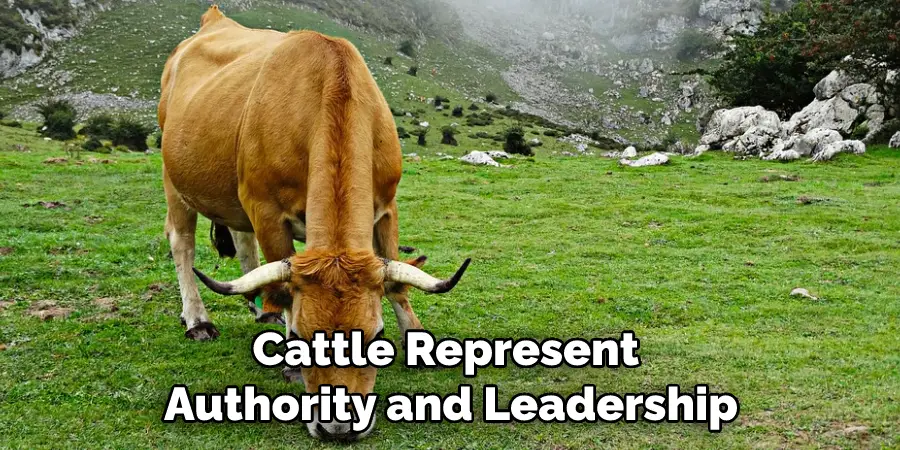
In some cultures, cattle represent authority and leadership; in others, they symbolize strength and wealth. As a spirit animal totem, the cattle encourages its observers to channel these qualities into their own lives, forging just paths and manifesting abundance.
Ultimately, those connected to the presence of the bovine would be wise to embrace its teachings – teaching us about contentment and loyalty and showing us how beneficial stability can truly be for our lives.
Conclusion
The cattle spiritual meaning is a powerful reminder of the importance of compassion and understanding and the power of patience. Cattle can also remind us to be gentle and kind in life, taking things slowly and gently so that we can easily reach our goals. In essence, cattle symbolism is an important reminder that everything has its own time and place in life.
You Can Check It Out to
