

It was a gray July morning on a Scottish harbor wall, and the wind smelled of seaweed and diesel. A small black bird sat on the water just below the pier, so still it looked like a buoy. Then it yawned, or seemed to, and the inside of its mouth flashed a startling red.
A fisherman mending nets nearby didn’t even look up. “Tystie,” he said, as though introducing a neighbor. A moment later the bird tipped forward and vanished under the surface, red feet kicking once before the water closed over it.
That small scene captures a lot about this bird. It looks simple and keeps to itself, yet it hides color, skill, and resilience in equal measure. This guide explores the Black Guillemot Meaning, Symbolism and Totem traditions people associate with it. It starts with the bird itself, then covers its spiritual meanings, its role as a spirit animal and totem, what an encounter might signify, and the cultural threads connected to it.
Getting to Know the Black Guillemot
A Member of the Auk Family
The Black Guillemot, Cepphus grylle, belongs to the auk family alongside puffins, razorbills, and murres. Its closest relatives are the Pigeon Guillemot of the North Pacific and the Spectacled Guillemot of northeast Asia. The three look so alike that casual observers often mix them up.
In Shetland and Orkney, locals call it the “tystie.” The name is usually traced to the Old Norse word for this bird, a small linguistic fossil left behind by Viking-era settlers.
Appearance in Summer
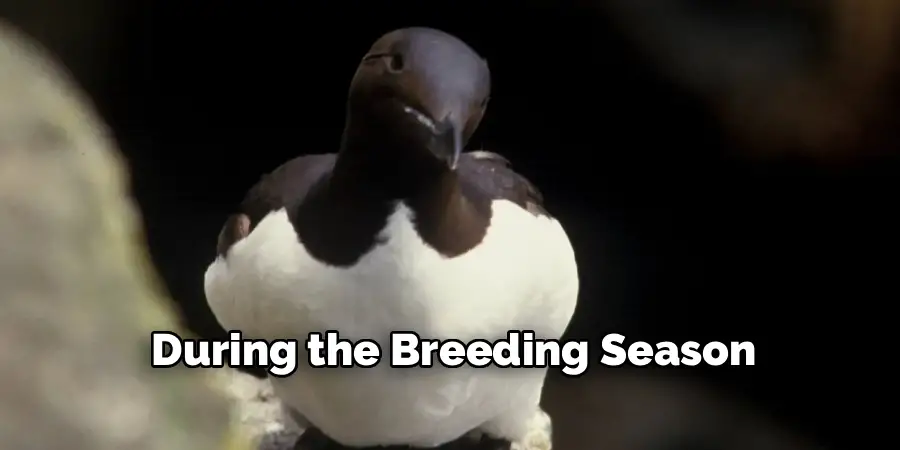
During the breeding season, the bird is almost entirely sooty black. A large, clean white oval sits on each wing, and unlike the Pigeon Guillemot’s patch, it usually lacks a dark bar across it. The legs and feet are a vivid coral red.
The mouth lining shares that same bright red. You rarely see it unless the bird calls or displays, which makes the reveal feel almost private.
Size and Build
This is a compact seabird, roughly 12 to 13 inches long. Its body is stocky and its wings are short. In the air it flies low and fast with rapid wingbeats, while on land it moves with a slightly clumsy shuffle.
Where It Lives
The Black Guillemot ranges across the North Atlantic and into the Arctic. You’ll find it along the coasts of Scotland, Ireland, Scandinavia, Iceland, the Faroe Islands, and Greenland. In North America, it breeds from Arctic Canada down to Maine.
A smaller population also lives along Alaska’s Arctic coast. Most birds stay close to shore year-round, though high Arctic birds may shift with the sea ice in winter.
Behavior That Shapes Its Symbolism
Diving to the Bottom
Black Guillemots hunt by “flying” underwater, using their wings to push themselves down. They tend to feed near the seabed in fairly shallow water. Butterfish, sculpins, and small crustaceans make up much of their diet, while Arctic birds rely heavily on Arctic cod.
That bottom-feeding habit is worth noticing. Plenty of seabirds snatch food from the surface, but this one consistently goes deeper.
Close to Shore, Rarely Far Away

Unlike many seabirds that wander hundreds of miles offshore, tysties are homebodies. They often feed within sight of their nesting coast. Some return to the same stretch of shoreline year after year.
Courtship and Calls
Their voice is a thin, high whistle, nothing like the harsh croaks of gulls. Pairs court by facing each other, whistling, and showing off their red mouths. They may also swim side by side or chase each other in short, splashing runs.
Nesting in Rocky Crevices
Hidden Homes
Black Guillemots don’t build open nests on cliff ledges like murres do. Instead, they tuck their eggs into rock crevices, boulder piles, and cavities in cliffs. A female typically lays two eggs on bare rock or gravel.
Adapting to Human Structures
These birds have also taken to harbor walls, piers, and stone breakwaters. In some places, they nest inside gaps in old masonry. Researchers and conservation groups have even provided nest boxes, and the birds readily use them.
Neighbors, Not Crowds
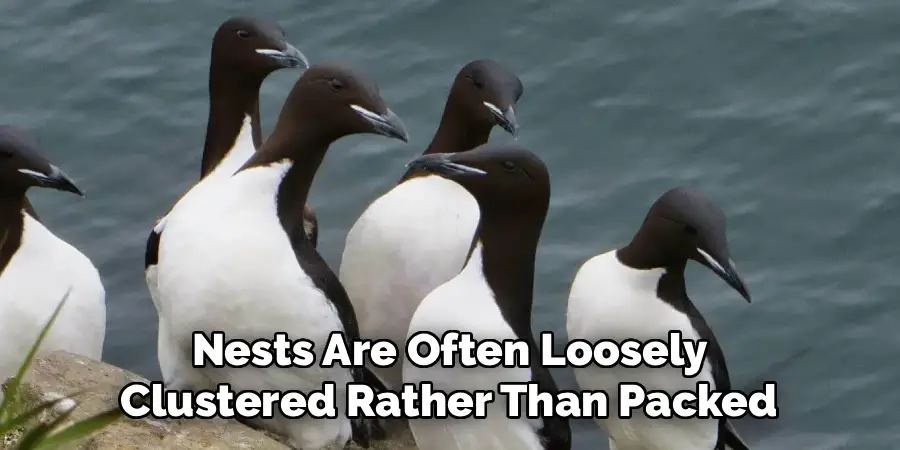
Nests are often loosely clustered rather than packed into dense colonies. Each pair keeps its own private hollow while still sharing a coastline with others. It’s a sociable arrangement with clear personal boundaries.
A Bird of Two Seasons
The Summer Look
In breeding season, the stark black-and-white plumage makes the bird easy to spot against gray water. Paired with red feet, it looks almost formal.
The Winter Transformation
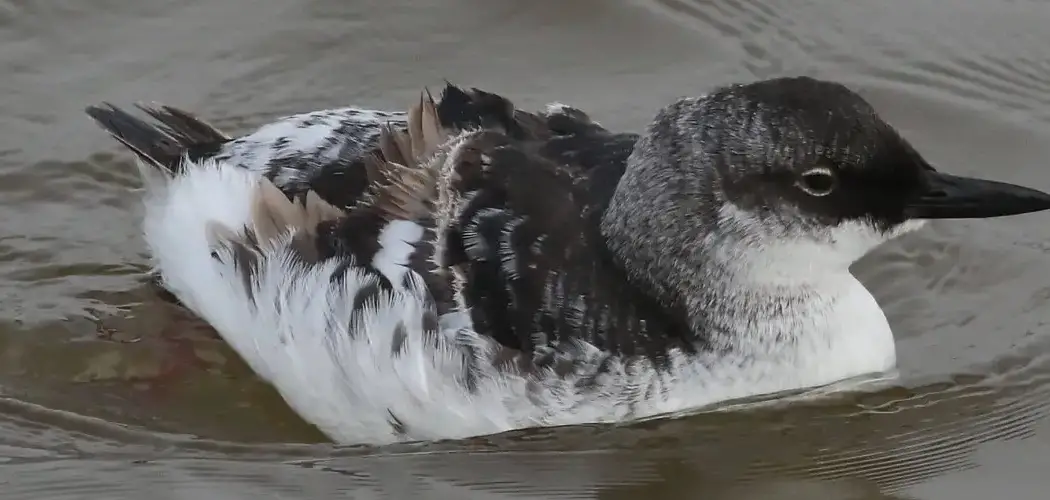
After breeding, Black Guillemots molt into a pale, mottled plumage of white and gray barring. The change is so dramatic that winter birds can look like a different species entirely. The white wing patch remains, a familiar mark through the change.
Why This Matters Symbolically
Few birds shift appearance so completely while staying in the same place. That contrast between outer change and inner continuity runs through much of the bird’s symbolism.
Black Guillemot Meaning and Symbolism
Hidden Depths
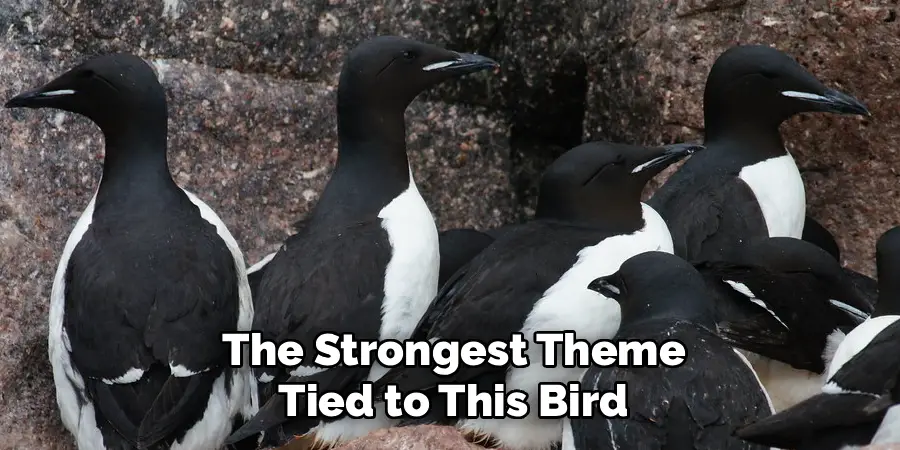
The strongest theme tied to this bird is depth beneath a plain surface. A small black shape on the water hides a skilled diver and a flash of red. Symbolically, this may suggest that quiet people often carry far more than they show.
It can also be read as personal advice. The tystie seems to encourage looking past first impressions, including your own first reactions to a problem.
Duality of Land and Sea
This bird nests on rock, flies through air, and hunts underwater. It belongs to all three spaces without fully committing to one. Many traditions link water with emotion and land with practical daily life.
A creature that moves easily between them could stand for balance. It hints that feeling deeply and living practically don’t have to compete.
Adaptability
Nesting in old harbor walls says a lot about this bird’s character. It doesn’t wait for perfect conditions. It works with the cracks and crevices available.
That gives its symbolism a grounded, unshowy kind of resilience. Adaptability here isn’t about reinventing yourself. It’s about making a reasonable home wherever you are.
Transformation
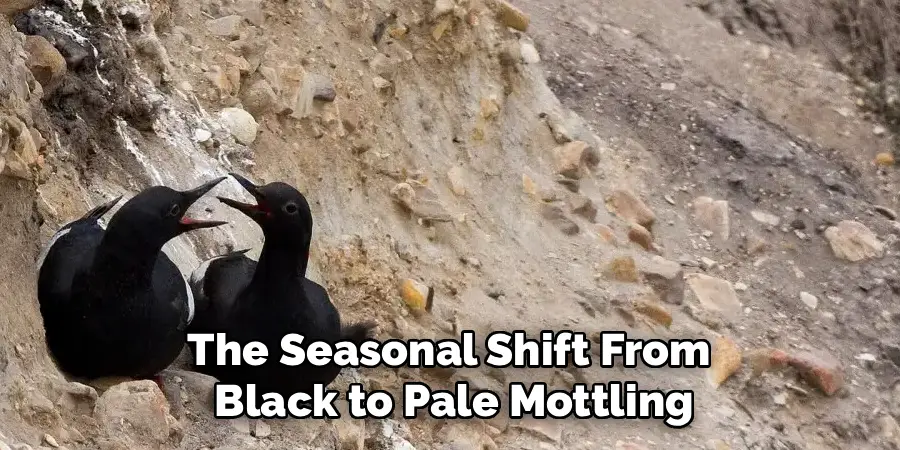
The seasonal shift from black to pale mottling is a natural symbol of change. You may look and feel different from one chapter of life to the next. The constant white wing patch suggests something essential stays the same underneath.
Passion Behind Reserve
Red feet and a red mouth on a mostly black bird make a striking contrast. Red is often linked with energy, warmth, and courage. Hidden on a reserved-looking creature, it may represent passion that only surfaces in the right moment.
People who seem calm or private but feel things intensely often relate to this quickly.
The Black Guillemot as a Spirit Animal
Who Connects With It
People drawn to this bird as a spirit animal often describe themselves as observant and somewhat private. Many feel most at home near the sea, on islands, or in small coastal towns. Others simply prefer depth in a few relationships over breadth across many.
Spirit animal connections are personal, of course. Nobody needs a particular personality to feel a bond with a bird.
What It May Teach
As a guide, the tystie appears to favor patient exploration. It suggests diving into a problem instead of circling it on the surface. It also models staying loyal to a place and people without becoming rigid.
Strengths of the Guillemot Spirit
Those connected to this bird may be quietly resourceful. They tend to make do, fix things, and build comfort in imperfect settings. Steady loyalty also fits the bird’s habit of returning to the same shoreline.
The Shadow Side
Every symbol has a flip side. Strong guillemot energy might lean toward hiding too much, staying tucked in the crevice when stepping out would help. Some may also undervalue themselves, assuming others only see the plain black surface.
Recognizing that pattern is useful. The bird still shows its red when it counts.
The Black Guillemot as a Totem Animal
A Note on Totems
The original concept of totems comes from specific Indigenous cultures, and modern spiritual use is looser and more personal. With that in mind, a totem is often seen as a lifelong symbolic companion rather than a passing messenger.
Traits of a Tystie Totem Person
People who hold this bird as a totem may feel comfortable on the edges of things. Coastlines, small communities, and the quieter corners of social life suit them. They tend to adapt without complaint and keep a close, trusted circle.
Living With This Totem
Honoring this totem might mean spending time by the sea when you can. It could also mean protecting time for reflection, or supporting seabird conservation. Even a nest box project or a coastal cleanup can feel like a fitting tribute.
What It Means When a Black Guillemot Appears
A Prompt to Look Deeper
Seeing one may be read as an invitation to go beneath the surface of a situation. A relationship, a decision, or a feeling might deserve more honest attention.
A Reminder of Balance
If you’ve been living entirely in your head, or entirely in your emotions, the tystie could point toward balance. Its life between rock and water suggests both sides need room.
Encouragement During Change
An encounter during a transition can feel meaningful. The seasonal molt mirrors the idea that change alters how you appear without erasing who you are.
Black Guillemots in Dreams
Dreaming of a diving seabird may relate to emotions or memories you’ve kept submerged. A bird hidden in a rock crevice could suggest a need for safety or rest. The feelings you had in the dream likely matter more than any fixed meaning.
A Caution Against Over-Interpreting
Honesty matters here. In places like Shetland or coastal Maine, tysties are fairly common harbor birds. Spotting one by a pier isn’t necessarily a cosmic sign. The meaning comes from what the moment stirs in you, not from the encounter itself.
Cultural and Mythological References
Norse Echoes
The clearest cultural trace is linguistic. “Tystie” in the Northern Isles and “teista” in Icelandic both descend from Old Norse roots. That shows the bird was familiar enough to Norse seafarers to earn its own name.
Specific Norse myths about the Black Guillemot, however, aren’t well documented. It would be misleading to claim it held a defined role in sagas or mythology.
Celtic Coastal Life
Along the coasts of Scotland and Ireland, seabirds were woven into daily life for centuries. They were food sources, weather signs, and markers of the seasons. The Black Guillemot was part of that world, though detailed Celtic folklore about this particular species is scarce in accessible sources.
Arctic Indigenous Connections
Inuit and other Arctic peoples have long lived alongside Black Guillemots in Greenland, Canada, and Alaska. Seabirds and their eggs have historically been part of coastal subsistence. Beyond that general relationship, specific spiritual traditions tied to this bird aren’t widely recorded, and inventing them would be disrespectful.
A Modern Symbol of Climate Change
The bird has gained new meaning in recent decades. On Cooper Island, off Alaska’s Arctic coast, biologist George Divoky has studied a Black Guillemot colony since the 1970s. As sea ice retreated and Arctic cod became harder to reach, the birds’ struggles began to reflect wider changes in the Arctic.
That research has turned the tystie into a quiet messenger of a warming world. It may be the bird’s most significant symbolic role today.
Conclusion
The Black Guillemot is easy to overlook. It’s small and dark, often bobbing beside a harbor wall where few people stop to watch. Yet underneath sits a skilled diver with red feet, a whistling voice, and a life split comfortably between rock, air, and sea.
Exploring the Black Guillemot Meaning, Symbolism and Totem traditions reveals themes of hidden depth, steady adaptability, and transformation without loss of self. As a spirit animal or totem, it seems to support people who are reserved on the outside and full of warmth underneath.
Next time you’re near a rocky northern coast, scan the water near the piers. When a black shape flashes white and red before slipping under, you’ll know exactly who you’re looking at.
